Showing posts with label gothic. Show all posts

Friday, November 2, 2018

Review: The Haunting of Hill House (2018)

I watched the new Netflix series The Haunting of Hill House and despite admiring many of the visuals and respecting what the show's creators are trying to do, I have come away feeling underwhelmed. I basically had to force myself to watch the last three episodes because I felt done with the whole thing by the time I finished episode seven (of ten).

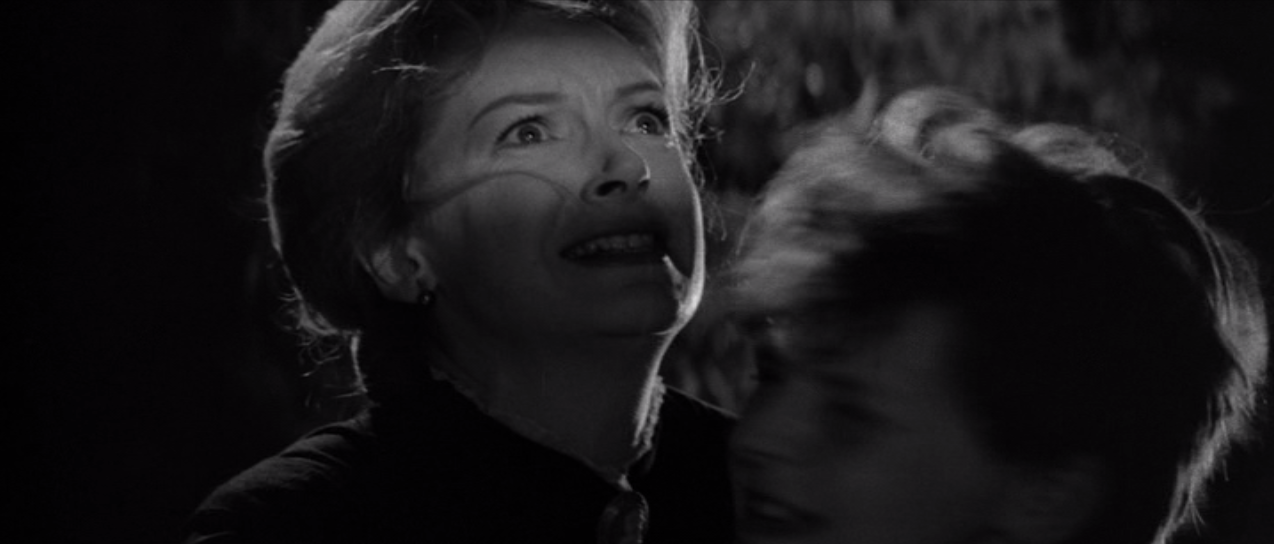
I have not read the source novel by Shirley Jackson but have seen (and very much like) the 1963 Robert Wise film adaptation The Haunting with Julie Harris. This new version actually bears very little resemblance to Jackson's book or that 1963 film, instead grafting a family melodrama onto the basic premise of a haunted house. As Holly Green's informative article notes, the haunted house premise and a few character names is where the similarities to the source material ends:
The novel exhibits enormous restraint, serving as a metaphor for female repression while leaving much open to interpretation. There’s only one scene in the book where two characters verifiably experience the same phenomena; all other supernatural encounters are from Eleanor’s perspective and offer no definitive take on whether the incidents were real or the product of her mind. Many times, we’re led to believe that Eleanor may be having a breakdown due to her inability to function under the prospect of her own freedom, as evidenced by the book’s horrific ending.
While Green attributes the show's problems to its deviations from the novel, I think the series' flaws can be mainly attributed to one root cause: Netflix bloat. Mind you, I am extremely open to slow-paced shows and films -- hell, I am an Andrei Tarkovsky fan! However, this show suffers from being too dragged-out and slow-paced. There just isn't enough meat on its bones. I was bored during long stretches of most of the episodes. I think this show would have been much stronger if it had been condensed to six or seven episodes rather than ten.

A few of the episodes really deliver --  I would single out ep. 4 "The Twin Thing" and ep. 3 "Touch," as being particularly riveting ones. But most of the others range from "dull but with a few good bits" (ep. 5 "The Bent-Neck Lady" and ep. 6 "Two Storms") to "utterly unnecessary" (ep. 8 "Witness Marks"). So overall, despite its high production values, compelling mood, and promising premise, it is hard for me to recommend this show. I am somewhat baffled at the strength and number of positive reactions I have heard about this series from other viewers.

Victoria Pedretti as Nell in the final moments of "The Bent-Neck Lady," one of the better episodes of The Haunting of Hill House. 

Specifically, the high points of The Haunting of Hill House include:
  • The character of Shirley and the actress who plays her, Elizabeth Reaser. Hers is by far the best-developed character and the best performance by an actor in this series. 
  • The twins' characterization and plotline -- aside from Shirley, the twins Nell and Luke are the only two other characters I truly care about, especially in their back-to-back episodes "The Twin Thing" and "The Bent-Neck Lady."
  • The final few moments of episode 5 "The Bent-Neck Lady." This reveal is the most mind-blowing and emotionally resonant moment of the series. (Yes, the show peaks early.)  
  • "Two Storms," the much-touted "single shot" episode, which functions as an homage to Hitchcock's Rope (1948), another "single-shot" film centered upon a body in a trunk / coffin. The problem is, this episode suffers for the comparison to Hitchcock's tightly plotted thriller. Much as I appreciate the gimmick of the "single shot" and admit the creators deployed it well, especially in the "Hugh pursues Olivia" sequence and in how the cuts were incorporated to indicate time-shifts, the episode is still about ten or fifteen minutes too long. It is draggy and boring at several points, especially early in the episode, and as usual, Theodora's character and her abilities are criminally under-deployed. 

Hugh follows Olivia -- the best scene in "Two Storms."

Sadly, for me, the low points -- or really just indifferent, dull points -- overwhelm the positives here. The few really excellent performances  -- Shirley, Nell, Luke, and their mother Olivia -- are swamped by the presence of the other characters that I don't care about (the oldest brother, the father) or that I want to care about but who are under-written and under-deployed (Theo, the Dudleys). Plus the whole happy ending of the finale just feels, as much of the series' emotional moments do, over-determined, cliched, canned. It just doesn't land for me.

I love me a good, tawdry, emotionally heightened family melodrama. I love Hollywood melodramas like Stella Dallas (1937), Imitation of Life (1934 and 1959), Now, Voyager (1942), All That Heaven Allows (1955), etc., and I am a super-fan of the PBS series Poldark (2015-present) -- yet The Haunting of Hill House is too sluggishly paced and too clumsy in (not) landing its emotional beats to earn my recommendation, with the exception of that fourth episode and a couple key moments in eps five and six. 

I would instead advise people who want to see a family melodrama fused with a haunting-type story to check out The Sixth Sense (1999) or The Babadook (2014). Those seeking a flat-out great ghost story movie should try the original version of The Haunting or (even better) The Innocents (1961).  

Saturday, October 1, 2016

Horror Film Class Required Movie List

A still from Frankenstein's beautifully shot opening sequence. 

I usually don't blog about academic or teaching-related subjects but I've been blogging about my love of the horror film for some time now. elucidating its roots in German Expressionism, exploring its defining classics, profiling its greatest monster movies, extolling its immortal masterpieces, calling attention to its best recent iterations, effusing about its Gothic incarnations, and even having fun reviewing some of its mid-range entries. So it seems timely and interesting to jot down the list of films I plan to screen in the horror film class I'm teaching this coming spring, with some brief commentary about my inclusions (and exclusions).* Here goes:

The Phantom of the Opera (1925, dir. Rupert Julian). While there is a large body of silent horror cinema I would have liked to include, in the end I narrowed it down to this one towering, influential classic. Would I have liked to show at least one German Expressionist film like The Cabinet of Dr. Caligari (1920), Nosferatu (1922), or The Golem (1920)? Yes, for sure.

I even seriously considered showing Carl Theodor Dreyer's Vampyr (1932), which, despite its oddball, art-film tendencies, is one of the most unnerving and uncanny horror films I can think of. (It is also one of two films -- the other one is The Student of Prague [1913] -- which would most help me teach the concepts in Sigmund Freud's famous essay "The Uncanny," an early required reading selection.)**

Yet in the end I went with Phantom, for two reasons: (1) It is familiar and easy to follow on the story level, anticipating as it does so many of the monster movies that get made in its wake, and (2) Lon Chaney, its amazing star. With all due respect to German stars Max Schreck and Conrad Veidt, Chaney gets my nod for the most important and talented horror film actor of the silent cinema. He more or less sets the standard for what a truly terrifying yet sympathetic monster should be, paving the way for stars like Boris Karloff . . .


Frankenstein (1931, dir. James Whale) and Dracula (1931, dir. Tod Browning). Of these two, I think Frankenstein is the better movie -- it's pretty much the best of the early Universal horror films -- but I could not imagine a syllabus without both. Hell, without Nosferatu in the mix, the Tod Browning / Bela Lugosi Dracula is one of only two bona fide vampire movies I've got!

Cat People (1942, dir. Jacques Tourneur) is a low-budget masterpiece produced by the legendary Val Lewton and directed by noir / horror master Jacques Tourneur (Out of the Past, Night of the Demon). I love the psychosexual dynamics of this film -- it makes the connection between sexuality, ethnicity, and horror quite clear. An exotic (and exoticized / fetishized / animalized) foreign woman (Simone Simon) believes that if she is ever sexually intimate with a man, she will turn into a cat and kill her would-be lover. Nevertheless she falls in love with and marries an over-confident, too-rational American man (Kent Smith) who doubts the reality of her ominous beliefs. Insane erotic-horrific antics ensue.

Creature from the Black Lagoon (1954, dir. Jack Arnold) is my 1950s creature feature selection. As with Cat People, I chose Creature mainly for its unnerving psychosexual and gender(-ed) dynamics. Although I am personally more partial to 1950s entries Gojira and Invasion of the Body Snatchers, there is something tonally and visually special about Creature from the Black Lagoon. The underwater photography sequences in particular are haunting, spooky, and magical -- they get to the heart of the creepy sexuality that drives the whole film. Interspecies lust and sexual terror set in a primeval jungle = thematically rich horror film fun.

Dracula (a.k.a. Horror of Dracula, 1958, dir. Terence Fisher). Great Britain's Hammer Film Productions is such an interesting studio, a scrappy little operation that accomplished much on the strength of tight scripts, economically cheap yet aesthetically bold set design, consistent direction, and the prodigious star talents of Christopher Lee and Peter Cushing. Hammer Films reimagined many key Gothic and horror film staples -- Frankenstein's monster, Count Dracula, the Mummy -- for the late 1950s and 1960s and beyond.

Specifically, Hammer's version of Dracula lends the vampire tale a lurid, feverish edge via full color cinematography and simmering sexuality. It is, simply put, a really fun Gothic horror film. Plus it can be used to discuss remakes and adaptations: after F.W. Murnau's Nosferatu (1922) and the 1931 Browning/Lugosi Dracula, the Hammer version is probably the next most influential (and best) filmic iteration of Bram Stoker's novel.

I couldn't eliminate either Peeping Tom (1960, dir. Michael Powell) or Psycho (1960, dir. Alfred Hitchcock) from the course's required viewing list, so I am making my students watch both of these landmark thrillers over the course of one week (two class meetings).

Obviously, Psycho is the more well-known, canonical choice, a truly great film that every cinema lover should see -- more than once. Although there are certain Hitchcock films (Strangers on a Train, The Birds) I like equally to Psycho and some (Shadow of a Doubt, Vertigo) I like even better, Hitchcock's 1960 masterpiece clearly holds a well-deserved place at the forefront of his impressive oeuvre. Psycho is also traditionally viewed as an important precursor to the rise of the slasher film in the 1970s.

But Peeping Tom is fucking amazing and I could not imagine leaving it off of this course's film list. So it stays too.

This Psycho - Peeping Tom split decision exemplifies what I call "the Godfather conundrum." A few years back when I was designing a course on 1970s Hollywood cinema, I really wanted to show the students Francis Ford Coppola's overlooked masterwork The Conversation (1974). I also knew that they needed to see The Godfather, because the idea of a 1970s Hollywood cinema class without The Godfather is absurd. And while maybe a third to a half of the students came into the class having seen The Godfather before, the remainder hadn't, so I felt I had to ensure that everybody saw the historically more significant film that time around. And due to The Godfather's extraordinary length, I didn't feel right asking the students to watch both Coppola pictures in one week. But for this horror class I'm doubling down on Psycho and the less-seen yet holistically better Peeping Tom.


Night of the Living Dead (1968, dir. George A. Romero). This is not only one of my all-time favorite horror movies, it is without a doubt the single most important and influential horror movie of the 1960s. More than any other film, Romero and company's Night of the Living Dead is responsible for raising the acceptable level of onscreen gore, bringing on the nihilism, and showing a whole generation of North American horror auteurs what could be done on a low budget.

As low-budget maestro John Carpenter says of Night of the Living Dead in a 2002 interview, "Everybody who made a low-budget film has been influenced by that movie, every person. Each and every one of us. We’d be lying if we said we weren’t."†

Suspiria (1977, dir. Dario Argento). Really, my whole syllabus is too English-language-o-centric, and omitting influential works by German Expressionists like F.W. Murnau, New Japanese Horror auteurs like Kurosawa Kiyoshi, and even recent "New French Extremity" mind-benders like High Tension and Martyrs really disappoints me. But in the end I chose to favor the North American horror film tradition, so as to foreground interpretive issues (like gender and sexuality) over a more historical account noting lines of directorial influence, etc.

Yet at no point could I ever imagine a horror film class that omitted Dario Argento, the Italian director whose work, along with Mario Bava's, exerted enormous influence on the post-1960s horror movie.†† The only difficult decision was "which film?" In the end I went with Suspiria because, while something like Deep Red speaks more directly to the development of the English-language slasher, Suspiria is more creepy and interesting and supernatural and Gothic. Its stands out from the pack. And its provocatively ambiguous use of point-of-view camera is unsurpassed in global horror cinema.


The Texas Chain Saw Massacre (1974, dir. Tobe Hooper). I've already written about how the original Texas Chain Saw is my favorite movie, ever. So let me confine my comments here to the film's role in my class: as a representative of the "slasher" subgenre.

Many critics and film historians contend that Psycho set the basic template for the slasher film, though the work of the Italian giallo directors is probably even more directly germane to the development of this popular subgenre. I like Texas Chain Saw because, along with Black Christmas (dir. Bob Clark), it essentially launched the North American slasher film proper in 1974. So I am focusing on the origins here, rather than the commercial heyday, which comes later, at the very end of the 1970s and the first several years of the '80s.

Yes, screening Chain Saw means I'm not showing other classic slashers like Black Christmas, The Hills Have Eyes (1977, dir. Wes Craven), Halloween (1978, dir. John Carpenter), Friday the 13th (1980, dir. Sean S. Cunningham), Prom Night (1980, dir. Paul Lynch), Friday the 13th Part 2 (1981, dir. Steve Miner), or A Nightmare on Elm Street (1984, dir. Wes Craven). So many great movies, so little time . . .

The Fly's Seth Brundle sez: "Help me, I'm masticating!"
Videodrome's Max Renn sez: "Long live the new flesh, muthafucka!"

Videodrome (1983, dir. David Cronenberg) is included because Cronenberg is the most inventive and original North American horror director and his work all but defines what it means to do "body horror." I have on-again off-again considered screening his remake of The Fly (1986) instead, but there is going to be a Cronenberg film and it will be hard to pry me away from Videodrome.

I have been occasionally conflicted about this choice. Videodrome is one of my personal favorite films, period. In the context of my class, I really love its depiction of how violence and eroticism get easily combined and tangled up with each other. Plus the whole premise of the in-movie "Videodrome" show (or signal, ee hee hee) is brilliant -- sexuality as (technologically induced) virus, a theme Cronenberg has been mulling over since his early short films in 1969.

Yet I have a feeling that my students might enjoy The Fly more. Videodrome is like a fervent, macabre manifesto whereas The Fly is more polished and plot-driven.‡ In The Fly, the passion is there but it is sublimated into the love affair between Seth (Jeff Goldblum) and Veronica (Geena Davis). Videodrome assaults its viewer with fourth-wall-breaking scenes of grotesque yet metaphorical sexviolence -- and shows us its depraved dystopia though the eyes of Max Renn (James Woods), a misogynistic, perverted, profiteering scumbag.

Alternatively, The Fly presents us with the slow, horrifying bodily disintegration of a basically decent if overreaching man. The horror consists of seeing him lose his humanity and become a vile insect-monster. The Fly's production values are much higher, and the plot way less twisty and ambiguous, than Videodrome's. While Videodrome may actually be the more cerebral (that is, thematically opaque) of the two, it nevertheless possesses a dark, nihilistic psychosexual streak that makes it more horrifying, if a bit puzzling and confusing as well. (I think I just talked myself back into sticking with Videodrome.)

Ringu (1998, dir. Hideo Nakata) and The Blair Witch Project (1999, dir. Daniel Myrick and Eduardo Sanchez) show that 1999 was a big year for horror. That year, Ringu started a global craze for New Japanese Horror films and consequently, despite the high quality of The Ring (2002) itself, spawned a ton of dull-assed English-language remakes of said films. Meanwhile, Blair Witch made a squillion dollars as a result of its canny, viral internet marketing craze and launched the found-footage subgenre that thrives to the present day.

Ginger Snaps (2000, dir. John Fawcett) is just a great teen horror movie, comedically and postmodernistically self-aware (like Scream etc.) but more interesting in part because of its focus on female sexuality. Brian De Palma's Carrie (1976) would be another strong contender with which to explore this theme, but Ginger Snaps is more contemporary and clever and hip. A solid, intelligent, entertainingly gory horror movie.

The excellent The Babadook (2014, dir. Jennifer Kent) is a personal favorite of mine and should pair well with the previous week's Ginger Snaps, dealing as they both do with issues of coming of age and family melodrama. I like that both films tell female-centered stories. The Babadook is my course's only female-directed film.

Horror often vilifies mothers and maternity by making them monstrous: most mothers who appear in horror movies (like Mrs. Bates and Mrs. Voorhees) are evil to the core. The Babadook reverses that trend, giving us a heroic, brave, determined mother who nevertheless must come to terms with her (family's) dark side. The Babadook fuses horror with melodrama to achieve something really special and interesting and cathartic. A must-see.

The Cabin in the Woods (2012, dir. Drew Goddard). This is not a personal favorite though I've enjoyed it both times I've seen it. It's my example of a postmodern hybrid horror-comedy thing -- that is, a "horror film" in quotes. Also, in large part due to the vigorous cult of Joss Whedon fandom, there has been much recent critical ink spilled on the film, some of which I will use to my advantage in teaching the film to students. It's a fun movie with which to conclude the semester.

Films I most regret leaving out:

  • Gojira (1954, dir. Ishiro Honda). Though I wrestled mightily between this and King Kong for my representative of a "classic" monster movie, I was leaning pretty heavily toward Gojira when a colleague helped me see that Creature from the Black Lagoon would be the best "creature feature" I could show. Creature speaks to U.S. imperialism and sexual repression from the inside, whereas Gojira grapples with nuclear-age guilt and trauma from the point of view of its real-world victims (the Japanese). Creature also pairs better with Val Lewton's Cat People in representing Golden Age monster movies. Sorry Gojira!
  • Alien (1979, dir. Ridley Scott), a truly great monster movie that, like Gojira, I had to cut for space reasons. Alien is well-executed on every level and stands as one of the best horror / science fiction movies ever made. Furthermore, this is a film I want to expose more students to because I want to weaken or debunk the myth that James Cameron's Aliens is superior to -- or even quite as good as -- its influential predecessor. Alien is much written about in film criticism so I have good analytical essays on it. But I ran out of room, so no Alien.
  • The Witch (2015, dir. Robert Eggers). I love this movie, perhaps too passionately and somewhat irrationally. And while screening it could open up interesting discussions about horror film fandom and historical verisimilitude, its main plotline is too similar to Ginger Snaps to warrant its inclusion. (Cue sad trombone.)
  • The Thing from Another World (1951, dir. Christian Nyby) and The Thing (1982, dir. John Carpenter). Fuck yeah! Need I even explain why showing these back-to-back in the same week would be cool? Let me add that I am a big John Carpenter fan and it is disappointing not to have Halloween or especially The Thing on this syllabus. 
  • Eyes Without a Face (1959, dir. Georges Franju). After Gojira, this is the exclusion that pains me the most personally. As an instructor, I would say that my omission of any German Expressionist films or more J-Horror films or even Wes Craven's Nightmare on Elm Street is more egregious, but as a fan, the absence of Franju's chilling masterpiece really hurts. I just love this movie a lot and it images stick with me and haunt me like few films' do. 
  • The Shining (1980, dir. Stanley Kubrick). Regular readers know that I am a major Kubrick fiend, and while in the early 2000s I considered The Shining to be one of the master director's lesser works, I am currently of the opinion that the Stephen King adaptation stands as one of Kubrick's best, most enduring efforts. It is also the absolutely perfect film for teaching about the cinematic Gothic (described here). But alas, I will instead ask Cat People, Suspiria, and both Draculas to perform that function in a course too crowded to incorporate The Shining or other great Gothic outings like The Innocents or Crimson Peak.   
  • Something -- anything -- by director Wes Craven. Sadly, his early shockers Last House on the Left and The Hills Have Eyes got bumped by Texas Chain Saw for slasher week, Scream was superseded by The Cabin in the Woods for postmodern "horror" week, Freddy Kreuger just got fucked over, and even The People Under the Stairs, which works well (alongside the brilliant Candyman) for teaching about horror movies that explicitly depict racial conflict, got nixed for space reasons. I am so sorry Mr. Craven! 
Candyman sez: "What about me, you white devil?"

Count Orlok sez: "What about me, you dummkopf??"

--
* This is a list (and a course syllabus) I have labored over mightily. It has been difficult for me to winnow down the film choices to fit a roughly fourteen-week semester. Ultimately, there are seventeen required-viewing films included -- I couldn't even trim this thing down to my usual one film per week.
** So deep runs my love for Vampyr and so convinced am I that it makes the perfect companion-piece to Freud's "The Uncanny" that in all the early versions of my horror film class outline, Vampyr figured as the first film. But then last spring I had dinner with film studies colleague Dr. Sid Rosenzweig, who asked me if I was starting off my class with Phantom of the Opera. Once he said it aloud, it seemed startlingly obvious to me that Phantom was indeed the best film with which to launch the course. Thanks Sid!
† From "Interview with John Carpenter and Austin Stoker" videorecorded at the Egyptian Theatre in Hollywood, 25 Jan. 2002. Available as a special feature on the Assault on Precinct 13 "New Special Edition" DVD (Image Entertainment, 2003).
†† Jason Zinoman discusses Bava's and Argento's work and importance in his enthusiastic and informative book Shock Value (Penguin, 2011) pp. 35, 38, 123.
‡ Videodrome is among my top four or five Cronenberg films alongside Shivers, The Brood, Dead Ringers, and Crash.

Saturday, April 9, 2016

German Expressionism and its Descendants


"As has often been noted, it is sometimes very difficult to distinguish between horror and science fiction. Not only that, it can at times be difficult to distinguish between horror and the crime film, and science fiction, adventure and fantasy as well."
-- Steve Neale, Genre and Hollywood p. 85.

Expressionism is an artistic movement that began in Germany around the turn of the twentieth century. Expressionism at first emerged in poetry and painting before moving into theater and, eventually, film. The style eschews realism in favor of a more intensely subjective point of view. It favors oblique angles, forced perspective, heavy lines, and distorted and grotesque imagery. With its roots in Germany's trauma of losing World War One and subsequently plummeting into a recession, Expressionism tends to depict exaggerated / extreme emotional states, especially grim, negative ones like terror, fear, pain, sadness, disorientation, loss, etc.

Though it predates German Expressionism proper, Norwegian painter Edvard Munch's The Scream (1893, 1910) is considered exemplary of Expressionist aesthetics and was itself influential on twentieth-century Expressionism.

The interwar period of German film production, lasting from 1919-1933, is known as “Weimar Cinema.” It is named after the Weimar Republic, Germany’s first democratic government. The tumultuous, unstable Weimar period coincides with the emergence of German Expressionist cinema -- that is, Weimar cinema and Expressionism are somewhat synonymous. Noting that "German’s cultural strength in the 1920s stood in marked contrast to its political and military weakness," historian of German film Stephen Brockmann describes Weimar Expressionism as
characterized particularly by the use of chiaroscuro (an Italian word containing the words for light and dark and indicating sharp contrasts between light and shadow), by jagged and bizarre sets that indicate an otherworldly or inhuman space, or that reflect the torments of the individual soul, and by stylized, unnatural acting.* 
I would add that many Expressionist films use mise-en-scene to simultaneously indicate otherworldly, uncanny spaces AND individual torment, as in Count Orlok's castle and surroundings in Nosferatu (1922), or the Moloch sequence when Freder first visits the underground factory in Metropolis (1927).

Austrian Expressionist painter Egon Schiele's Living Room in Neulengbach (1911). . . 

. . . features weird angles, heavy lines, and a distorted sense of perspective similar to what we see in this shot from The Cabinet of Dr. Caligari (1920). 

The first German Expressionist film was The Cabinet of Dr. Caligari (1920), directed by Robert Wiene. Caligari tells the story of Cesare (Conrad Veidt), a homicidal somnambulist controlled by the evil Dr. Caligari (Werner Krauss). As part of an attraction at a traveling carnival, Cesare tells people's futures, which usually involve impending death -- then at night, in a trance, he goes into town and murders them. Brockmann calls Caligari the "quintessential example of German Expressionist cinema" and suggests that, via the psychological instability of its onscreen protagonists, the film unnervingly depicts an "entire world that is possibly out of balance" (pp. 59, 62).**

High-contrast lighting is one of the most pronounced aesthetic properties of German Expressionism, horror films, and films noir, as these stills from Caligari, Dracula (1931), and The Third Man (1949) respectively demonstrate.


German Expressionist cinema had run its course by about 1930 with The Blue Angel or 1931 with M. Yet its techniques, style, and thematic tendencies have been enormously influential on many subsequent film cycles and genres.

Specifically, Expressionist cinema gives rise to the sound horror film (predominantly a rural genre, descended mainly from Caligari and F.W. Murnau's Nosferatu) and, later, to film noir (predominantly an urban genre, descended from Caligari and most other Expressionist films). German Expressionism (especially Fritz Lang's Metropolis) also exerts a strong influence on the development of science fiction, horror's generic cousin. No Metropolis = no Bladerunner.

The Replicants in Bladerunner . . .

. . . are cinematic descendants of the Maria robot from Metropolis . . .

. . . as is this guy.

Speaking of Bladerunner, observe how film noir and science-fiction blend together so organically in that film. Same with stuff like Dark City (1998) and the Christopher Nolan Batman trilogy (2005-12). I think these genres and styles intermix well because of their shared Expressionist heritage -- its aesthetic strategies and dark, grisly themes. Along this same line, there's Tim Burton's excellent Batman duology (1989, 1992), especially the criminally underrated Batman Returns, which mixes noir and sci-fi and horror and gothic melodrama all in one. It's a veritable Expressionism-descendant feast!

"Holy genre mash-ups, Oswald Cobblepot!"

In his historically grounded book Genre and Hollywood, Steve Neale refuses to split apart cinematic sci-fi and horror, treating them as "related, but also as distinct" intertwined genres (p. 85). One only need consider obvious examples like Alien (grotesque body horror meets hard sci-fi) and Bladerunner (with its Metropolis-like "evil robot run amok" plotline plus raw frozen eyeballs and graphic head squeezings) to see the truth of this conception. Also note how certain monster movies, especially 1950s ones like The Thing from Another World (1951), Gojira, Them! (both 1954), and even the slightly more "hard" sci-fi thriller Forbidden Planet (1956) tread a super-fine, nearly indistinguishable line between horror and science-fiction.

However, despite their inherent messiness and tendency to hybridize, film genres have specific histories. The sound horror film begins with the Universal monster-movie cycle launched by Dracula and Frankenstein in 1931. The American film noir starts with The Maltese Falcon in 1942 though I've heard Julien Duvivier's Pepe Le Moko (1937) and even Fritz Lang's M (1931) put forward as credible candidates for the "first" film noir.*** In any case, as we've seen, both horror and noir share an antecedent: German Expressionist cinema of the 1920s.

Film horror is a fusion of Expressionism (twisted psychology, high-contrast lighting, dark shadows) with the literary Gothic (or romantic gothic, including Dracula, Frankenstein, etc.) and the grotesque (the explicit blood, gore, graphic monstrosity, and gross-out stuff).


Film Noir is a fusion of Expressionism (twisted psychology, high-contrast lighting, dark shadows) with hardboiled detective fiction and the police procedural film genre.† Film noir is extremely male-centered due to its ties to the hardboiled tradition, the police procedural, and the gangster film.

Like the melodrama or weepie, film noir favors style and sensationalism over complex character psychology. But unlike the melodrama, which uses elevated style to convey heightened (usually female) emotions and to evoke viewer pathos, film noir uses its distinct stylistic repertoire to reflect (primarily) white, male subjectivity and to achieve a disorienting, alienating effect.

As Raymond Borde and Etienne Chaumeton argue in "Towards a Definition of Film Noir,"
the moral ambivalence, the criminality, the complex contradictions in motives and events, all conspire to make the viewer co-experience the anguish and insecurity which are the true emotions of contemporary film noir.††

At first glance, this alienating strategy would seem to be at odds with the attempt to generate pathos, but the more I think about it, maybe it isn't. After all, Borde and Chaumeton describe the "anguish and insecurity" central to the viewer's experience of film noir as "emotions," which are the traditional domain of melodrama.

Furthermore, both noir and melodrama use highly stylized mise-en-scene to achieve their effects, so there is always a tension between the intensity of the subjective emotions being evoked and one's distanciating awareness of stylistics and surface aesthetics. It may be most accurate to say that classic film noir is a form of highly stylized male melodrama, a violent precursor to the male weepies of the 1950s starring method actors like Marlon Brando, Montgomery Clift, and James Dean.

That said, despite its ventures into the realm of male melodrama, I'm pretty sure the film noir has more in common with the action film and the horror film (distanciating genres) than with the weepie or the Gothic romance (emotional genres). Or does it? Paul Schrader says it favors compositional tension over action . . . crap. Hard to pin down.

Anyway, to conclude, I'll say a few words about some must-see German Expressionist (and related) films:


Subtitled "A Symphony of Horror," F.W. Murnau's Nosferatu (1922) is probably my favorite German Expressionist movie. Unusual for its being shot outdoors in real wilderness locations, Nosferatu is the main progenitor (along with Caligari) of the sound horror film. The influence is direct: Nosferatu is an unauthorized adaptation of Bram Stoker's Gothic novel Dracula (1897). which also provides (legally obtained) story material for Universal Studios' Dracula (1931) starring Bela Lugosi.

Plus legendary Expressionist cinematographer Karl Freund, who lensed The Last Laugh for Murnau and Metropolis for Fritz Lang, was Tod Browning's cinematographer on Dracula.

Count Dracula sez: "I may be Transylvanian, but my cinematographer is a German Expressionist!"

Either The Last Laugh (1924) or Faust (1926) could stake a legitimate claim to being F.W. Murnau’s greatest German Expressionist film masterpiece. (His greatest film ever, Sunrise, was made in Hollywood so I'm not counting it here.)

Of the two, Laugh is more intimate, the tale of one humble (yet proud) doorman's downfall into old age and despair. Laugh's dynamic camera work and insistence upon the visual -- it uses a mobile, "untethered" camera style and eschews intertitles -- makes it stand out in the German Expressionist film canon. (Again, you'll have to see Sunrise if you want to see Murnau top himself in this area.)

Then there's Faust, the highest-budgeted Expressionist film Murnau worked on, grandiose in scale and breathtaking in its use of lighting and special effects. Frankly, for its startling imagery alone, and for Emil Jannings' insane performance as Mephisto, Faust might be my tied-for-favorite Murnau film.  In any case, if you want a succinct one-two punch of some of the most provocative, dark, and beautiful German Expressionist cinema ever made, you can hardly go wrong with either of these mid-career Murnau masterpieces.

Mephisto sez: "Watch German Expressionist cinema or I'll incinerate your SOUL!!"

Fritz Lang's Metropolis (1927) is the one other German Expressionist film -- besides The Cabinet of Dr. Caligari and at least one of Murnau's -- that I urge everyone to see. Metropolis is a grand, dystopian adventure story, told on a big canvas with lots of eccentric weirdness to enjoy along the way. All the Dr. Rotwang stuff is great, as is the havoc wreaked by the Maria robot once she's set loose. Metropolis is the ur-text of urban sci-fi / dystopian horror -- pretty much all later science-fiction owes a debt to Lang's epic film. So carve out some time -- Metropolis is long, two hours and thirty three minutes -- and see the damn thing. Hell, we're lucky to even be able to see it in its (mostly) complete form at all.

Sunrise (1927), subtitled "A Song of Two Humans," was made in Hollywood but still rivals (and possibly surpasses) any of the Expressionist masterpieces Murnau made in Germany. Released in the year "silent films reached perfection and then disappeared," Sunrise, according to Roger Ebert, "was not a box-office success, but the industry knew it was looking at a masterpiece." Turner Classic Movies' Bret Wood goes even further, boldly claiming that Sunrise "represents the artistic pinnacle of the cinema as a purely visual medium." In other words, go see Sunrise.


M. (1931) is Lang’s proto-noir masterpiece about a manhunt for a serial killer. The suspenseful, spooky, brilliantly edited and sound-designed M incepts the serial-killer thriller, and is the most obvious Expressionist antecedent to Hitchcock's 1930s work and to film noir in general.

Scarlet Street (1945), a classic Hollywood film noir directed by Lang.

Nosferatu (1979), Werner Herzog’s amazing color and sound remake of Murnau’s original, silent Nosferatu. I highly recommend Herzog's uniquely updated take on the vampire myth, with a freakishly edgy Klaus Kinski playing the title role. (I discuss Herzog's version glancingly here.) 

Orson Welles' Macbeth (1948).

German Expressionist Cinema also inspired Jean Vigo's Poetic Realism, Dreyer, Hitchcock, Welles, and possibly Gordon Willis' low-exposure work on The Godfather. Not to mention Batman's most enduring nemesis, the Joker.

German Expressionist film star Conrad Veidt sez: "I'm the original inspiration for the Joker, Batman fans!"

--
* Brockmann, A Critical History of German Film (Camden House, 2010) p. 43, 50. Brockmann's introductory overview of Weimar Cinema on pp. 43-57 is essential reading if you are interested in the history of Expressionist cinema.
** Intriguingly, Brockmann also mentions Caligari as example of the cinematic uncanny (p. 65), a subject I will take up at length in a separate, forthcoming post.
*** It dawns on me that I will need to write a whole separate post (or two) on film noir, perhaps in conjunction with Entertainment Weekly's #27 film, The Maltese Falcon (1941).
† Fritz Lang is a key figure here -- the great Expressionist director left Germany for Hollywood after Hitler took power and subsequently made several American noirs including Ministry of Fear (1943) and Scarlet Street (1945). Indeed, Brockmann calls Lang "one of the transmission mechanisms by which German Expressionist sensibilities influenced American film noir" (p. 84).
†† Borde and Chaumeton's 1955 essay is reprinted in Alain Silver and James Ursini's Film Noir Reader (Limelight Editions, 1996) pp. 17-25.

Monday, February 29, 2016

Review: The Witch (2015)


The Witch is an excellent horror movie. By saying this, I indicate my disagreement with Lesley Coffin's claim that The Witch is not really a horror film but rather "a drama that happens to have horror [elements] (like Macbeth)." I sympathize with Coffin's idea that the promotion and marketing of a movie like The Witch can impact how viewers receive it. But Jason Coffman's article on horror film fandom tackles that "expectations" issue with greater nuance, and like Coffman, I maintain a broader definition of what constitutes horror than Coffin does.

I don't expect The Witch to feature, say, overtly amusing characters, fast cutting, jittery camera work, jump-scares, or less overt commitment to its supernatural themes. Those are not necessarily deal-making or -breaking elements of horror movies for me.* If anything, I slightly prefer the kind of deliberate, creeping terror and intentional, unnerving ambiguity "restrained" horror films like The Witch so artfully maintain.**

Foundationally, I'm going with Noel Carroll's idea from The Philosophy of Horror:
works of horror are designed to elicit a certain kind of affect. Members of the horror genre will be identified as narratives and/or images (in the case of fine art, film, etc.) predicated on raising the affect of horror in audiences.***
Since The Witch primarily intends to scare and disturb its viewer, rather than to have us feel for the onscreen characters' suffering and weep for them, it is a horror film, not a melodrama.

To offer a comparative example, The Witch is more clearly and plainly a horror film than Crimson Peak. Crimson Peak is a legitimate specimen of what Coffin describes, a Gothic melodrama that integrates horrific scenes and confronts the supernatural (presumed or actual) yet is more fundamentally Romantic than horrific. Conversely, The Witch and The Babadook are more similar to each other in overall tone (horrific and scary with a wee bit of family melodrama thrown in) if not in delivery (The Witch is grimmer and slightly gorier, The Babadook more conventionally edited, including some jump-scares).

However, if The Witch is firmly on the horror side of the generic fence, it also resembles the melodramatic Crimson Peak in some ways: it unfolds at an even pace, favors a still or slow-tracking camera, generally eschews jump-scares, and delivers its horror creepingly and intelligently. The Witch grapples with some real issues -- relations between the sexes, incest taboos, the limits of faith, the dangers of "civilizing" the wilderness -- while never losing sight of its main goal, to creep us out and entertain us.

Anya Taylor-Joy delivers a riveting performance as Thomasin, 
the young protagonist of The Witch.

In terms of its overall narrative and themes, The Witch is fairly similar to Lars von Trier's amazing Antichrist (2009) and to Rob Zombie's less-than-amazing The Lords of Salem (2012). I don't want to give too much away here but both The Witch and Antichrist use non-human animals and animal imagery to convey much of their horror. Both films suggest that the line between the human and the animal is permeable, possibly even nonexistent. In The Witch, a rabbit, a goat, and a raven all play pivotal roles in representing what's happening to Thomasin's family, thus there is an inherent ambiguity at play since human viewers may project any number of things onto the images of these animals.


Speaking of viewer takeaways, A.A. Dowd offers an insightful yet troubling reading of The Witch as a film so committed to period realism that it
situates itself very purposefully in an actual time and place; it doesn’t require some huge mental leap to connect its fictional terrors to the very real ones inflicted upon a group of innocents in the same geographic region about six decades later. Is The Witch a vivid portrait of theological paranoia, showing a small community torn apart by its irrational suspicions? Or is it a cautionary tale about a family of Christians who leave the church, only to discover that such unfounded fears actually aren’t unfounded? [Director Robert] Eggers seems to want it to be both, but the result is a horror movie that comes dangerously close to showing sympathy for the real devils, the kind that burned witches instead of instructing them.
I find Dowd's interpretation plausible and concede that many viewers might take The Witch this way. Yet I feel that the film is basically woman-positive and pretty clearly wants us to take the side of witchdom. Anything scary or horrific that is attached to women's bodies, behavior, or images in The Witch is recuperated, I think, by the way the film shows us these events almost entirely from Thomasin's point of view. Thomasin may place a bit too much trust in her hapless father, and he in her, but the film finally wants us to sympathize with Thomasin and her ordeal. It is made clear early in the movie that it is the women, not the men, who are the key players in this outcast family. As in so many of the best horror films, The Witch ultimately exposes patriarchy as hollow and foolish. The real power, the ability to create and to destroy, lies on the other side of the sexual divide.

If you enjoy well-made horror movies like The Babadook or It Follows or even The Conjuring, you should also enjoy what The Witch has to offer. If, on the other hand, you prefer your horror to feel more like the Paranormal Activity franchise or the 2005 Paris Hilton remake of House of Wax, then maybe The Witch isn't for you. I know that for me, The Witch joins The Babadook, It Follows, and Gothic melodrama Crimson Peak as one of my favorite recent horror movies. As Coffman concludes,
There is an audience for thoughtful, intelligent genre films, and it is up to us to make it known that we are here and that we are looking for films that expand the definitions and push the boundaries of genre cinema.
Let's do it! Go see The Witch -- in theaters if possible -- for on top of everything else, the costumes and visuals kick ass!


UPDATE 2/29/2016 (later in the day): I avoided SPOILERS in the main body of my review but now I want to add a few SPOILER-y remarks about The Witch's ending. Unlike Lesley Coffin, I do NOT take the film's early revelation of an actual witch in the woods (we see a nude old woman doing stuff with what we assume to be baby's blood) to rule out the possibility that everything in the movie occurs solely in the (Puritanical) minds of Thomasin's family members. That is, even stuff that APPEARS to be objectively "real" or otherwise inexplicable in The Witch may not be. As I wrote to a couple friends after we saw the movie together:
Could it be that much of what we see is subjective / imagined but that the power of these Puritan weirdos' faith / denial of reality is so great that it looks to the viewer like there is an objectively real supernatural presence in the woods? That is, we see everything through the eyes of a fervently devoted Puritan family, so . . .
Along similar lines, once you've seen the film and are mulling over its heady, ambiguous ending, consider this guy's interpretation. Or, as my friend succinctly puts it, "I do kinda like the idea that [Thomasin] was driven towards witchdom by her puritanical parents but didn't necessarily become one. Once she killed her mom she may have dreamed/fantasized about becoming one because she thought of herself as an abomination." Well said old bean!

UPDATE 3/3/2016: Another friend with whom I saw the film sent me a link to this article, which supports the idea that The Witch "is a great exploration of the dark, chaotic, troubled psychology of English colonists at the very beginning of the empire’s colonial experiment in North America."

UPDATE 3/13/2016: Check out Mark Kermode's awesome review of The Witch, in which he agrees with me that "it is still possible (and indeed preferable) to read The Witch as a story whose demons lurk largely within the mind." Kermode concludes that "in an age of cattle-prod scares, The Witch plants its pitchfork proudly in the more unsettling landscape of evocative, intelligent modern horror."

--
* As Coffman writes: "Like Lars von Trier’s Antichrist, The Witch takes the genre back to primal, lizard-brain territory: fear of the dark, fear of nature, fear of the unknown, and most of all fear of other people — even the ones you think you know. How anyone could come away from The Witch and deny that it is a horror film defies reasonable explanation."
** "Restrained" horror is outlined by Daniel Martin on pp. 36-40 of his article "Japan's Blair Witch" in Cinema Journal 48.3 (Spring 2009). I also discuss it in my Crimson Peak review.
*** Carroll, The Philosophy of Horror: Or, Paradoxes of the Heart (Routledge, 1990) p. 15.

Wednesday, November 4, 2015

Review: Crimson Peak (2015)


Wow! Guillermo del Toro's Crimson Peak is one of the best films I've seen this year, deserving of placement alongside The Babadook and What We Do in the Shadows as one of the three best horror-themed releases I've seen recently.

I say "horror-themed" because Crimson Peak is really a gothic romance, just as Shadows is really a comedy-mockumentary despite some explicit gore and a few good scares. Peak is a creepy, supernaturally tinged family melodrama, so superior an example of the cinematic Gothic that it must be named alongside those other two standout films.*

Mia Wasikowska as Edith, the heroine of Crimson Peak.

Plot- and mood-wise, Crimson Peak is a lot like The Woman in Black (2012), only much much better. Peak is what Woman could have been if the latter film had trusted its story, actors, and creepy tone and relied less upon jump-scares accompanied by hamfisted musical stingers.

I am not completely against jump scares, but I do not like "horror" films that rely too extensively on the device. I especially dislike movies that emphasize and/or broadcast every scare with a heavy handed, too-on-the-nose musical cue of some kind. This is what Nigel Floyd and Mark Kermode call "cattle-prod cinema," and I find it dull, pointless, and nerve-wracking.

Nigel Floyd sez: "We like horror films that build up a sense of suspense that is built into the narrative."

No, give me instead what film scholar Daniel Martin calls "restrained horror," a subgenre consisting of films "more suggestive than graphic" that "treat their subject with utter seriousness, jettisoning the [overt] humor" that characterizes films like Scream.**

While the restrained horror films Martin talks about (like Ringu and The Blair Witch Project) are not exactly Gothic films like Crimson Peak, they may be close cousins. Both restrained horror and the Gothic prefer the slow burn over the easy scare. And the use of deliberate restraint to provoke sustained terror, what Nigel Floyd refers to as "cumulative dread" in the video, creates a tone central to the Gothic. As this excellent review explains,
part of what defines the gothic is how paradoxically trusting it is; it relies on audience familiarity for much of its atmosphere and emotional power. We know the girlish innocent will be terrified in the great dark house; we know the gentry are hiding a terrible secret; we know what happens when you unlock Bluebeard’s closet. The gothic isn’t a genre of surprises, it’s a genre of dread, and to dread something, you must first know what it is.
Of course, I would argue that all genres are "trusting" of their audiences and exploit our familiarity with certain tropes and traditions to generate pleasurable effects. But I agree that as an exemplary specimen of the Gothic, Crimson Peak marshals its generic conventions and intertextual references in order to cultivate dread, and that it does so brilliantly and effectively.

My girlfriend, an expert on the British Gothic, tells me that Crimson Peak falls into at least two related traditions. She calls the movie "Victorian gothic meets country house ghost story," a hybridization of elements from literary works including Mary Shelley's Frankenstein (1818), Wilkie Collins' The Woman in White (1859), Sir Arthur Conan Doyle's Hound of the Baskervilles (1902), Bram Stoker's Dracula (1897), Charlotte Bronte's Jane Eyre (1847), Edgar Allan Poe's "Fall of the House of Usher" (1839), and Jane Austen's Northanger Abbey (1817).***

Film-genre-wise, Crimson Peak belongs in a class of movie that includes The Others (2001), The Innocents (1961), The Shining (1980), and Rebecca (1940), as well as several film versions of the novels listed above. 

Crimson Peak's inquisitive detective-heroine Edith . . . 

. . . is like Miss Giddens (Deborah Kerr) from The Innocents, one of the best gothic ghost-story movies you'll ever fuckin' see. 

Similarly, Peak's intense, enigmatic Lucille (Jessica Chastain) . . . 

. . . is a lot like Mrs. Danvers (Judith Anderson) from Hitchcock's Rebecca.  

I will not get into spoiler territory, but I must briefly mention Peak's breathtakingly lush sets and production design. The manor house to which Thomas takes Edith is an amazing feat of set design and construction. One of the most ingenious features of the house is a ragged hole in the roof that allows rain, mist, and snow to penetrate the very air of the main hall, enhancing the atmosphere of decay.†

The film's greatest visual achievement is probably its climactic snow scene, an amazing battle set among the various fixtures of Thomas' mining machinery. There isn't much graphic gore in Crimson Peak, but what violence occurs is brutal and believable, as this scene exemplifies.

And god, the performances. Mia Wasikowska is a particular favorite of mine, but all three principal cast members are superb here. I have never seen Tom Hiddleston, playing the mysterious pretty boy, do anything better. As I learned from this article, the original casting was going to be Benedict Cumberbatch as Thomas and Emma Stone as Edith. As I watched the film, I remembered this casting factoid and thanked the universe that the production instead landed Hiddleston and Wasikowska for these roles. And the supporting cast is great too, especially Charlie Hunnam as Alan and Jim Beaver as Edith's father.

This review sounds hazily disappointed that Crimson Peak isn't scarier, yet what does one expect from del Toro? Crimson Peak marks a return to the, well, peak works of the director's early career, the gothic masterpieces The Devil's Backbone (2001) and Pan's Labyrinth (2006).†† Maybe the more appropriate adjective to describe these films is unsettling -- yes, Crimson Peak is unsettling in a slow-burning, emotional, violent, twisted, and melodramatically satisfying way. Or, as AV Club's Genevieve Valentine puts it:
The film isn’t very scary, because it trades so carefully on scares we’ve come to expect. It isn’t very scary because its ghosts aren’t antagonists; they’re a manifestation of generational guilt, sure, but they aren’t here to haunt Edith—they’re here to save her. And the movie’s visual markers—so pristinely devoted to its ancestors in the opening acts—sidestep the ghosts altogether by the climax. Edith stands victorious in the snow, blood-red clay on her white hem and blood spattered across her gown. She’s closed the loop on the vampire narrative, all by herself.
All this plus amazing set design with lots of freaky red ooze. Definitely go see this movie.

Guillermo del Toro sez: "Okay guys, for this next take, both of you will be fully immersed in horrid red filth."

UPDATE 11/5/2015: As the last line of my closing Genevieve Valentine quotation suggests, Crimson Peak solves Dracula's "Mina problem." This past summer and fall, my girlfriend and I watched several film adaptations of Dracula, including F.W. Murnau's Nosferatu (1922), Tod Browning's Dracula (1931), Hammer Films' Horror of Dracula (1958), Werner Herzog's Nosferatu (1979), and even the "sexy" Dracula (1979) starring Frank Langella. One thing we noticed again and again is how every single film version of the tale sells out Mina, diminishing her role in what is, in the source novel, a victory brought about by her research, record-keeping, and diligence. In the novel, Mina is an investigator and a writer, like Crimson Peak's Edith. Yet no film version ever allows her to play that central a role, instead handing off the investigative and vampire-hunting functions to Van Helsing and/or Jonathan Harker.

The closest any film version comes to empowering Mina is Herzog's Nosferatu, in which she is the sole figure who recognizes Dracula's threat and takes steps to stop him. However, Herzog's film ends with Mina sacrificing herself to the vampire rather than destroying him through direct action. The movie ends with Harker, now a vampire himself, riding off across the plains in daylight, perhaps emphasizing the monstrously adaptable and therefore unstoppable nature of vampiric patriarchy but nevertheless doing the deceased Mina no favors.

While Werner Herzog's 1979 remake of Nosferatu ridicules the narrow-minded inefficacy of Harker and Van Helsing, positioning Mina as the only character who comprehends and takes action against the Count . . .

. . . it nevertheless kills Mina off, allowing Harker, himself now a vampire . . .

. . . to escape and presumably wreak havoc on the world. I read this as a critique of the relentless destructive power of patriarchy, yet the film makes this critique at the expense of its only significant female character's life.

As Valentine writes, "It’s notable that the blood-soaked ghosts of Crimson Peak are nearly all women, and all they ever do is communicate sins to help Edith avoid danger." Indeed, for Peak also tells the story of a battle between women for the love of a man. I am surprised I didn't think of this angle when I was initially writing this review because I am a feminist and I enjoy female-centered films. Yet there is so much going on in Crimson Peak from a genre perspective that I got lost in that aspect. I only later zeroed in on the "subversive," feminist implications of Edith's arc and the way in which the film "closes the loop on the vampire narrative" and solves the problem of Mina's longstanding cinematic defanging.

--
* Some of my readers may wonder why It Follows is not included in my brief list of top-notch horror of the past year. There is much pleasure to be had in It Follows, David Robert Mitchell's delightful retro homage to late-1970s and early-1980s horror. It Follows takes a Cronenbergian premise -- pretty much the same "sex-as-virus" metaphor that drives Shivers (1975) and Rabid (1977) -- and shoots and paces it like John Carpenter's Halloween (1978). Shot on location in Detroit, the movie has become something of a phenomenon in film-critical circles this year, earning the number two spot on AV Club's "The 25 Best horror films since 2000" list. I think it deserves all the acclaim it gets. It is a generally excellent horror film. But it just isn't as haunting, memorable, terrifying, or thematically audacious as, say, The Babadook or Crimson Peak. (In fairness, while film genius A.J. Snyder concurs with my feeling that It Follows is mainly "a collection of other people's ideas," this reviewer disagrees with me, arguing that "It Follows is no knockoff.")
** Daniel Martin, "Japan's Blair Witch: Restraint, Maturity, and Generic Canons in the British Critical Reception of Ring." Cinema Journal 48.3 (Spring 2009) pp. 39, 36.
*** The Jane Eyre connection is especially neat-o since Mia Wasikowska played the title role in a superb film version of Jane Eyre in 2011. And Peak's Dracula-ish vampiric themes take on additional resonance given that Tom Hiddleston starred in Only Lovers Left Alive in 2013.
† The sets, settings, and costumes are very important in a Gothic melodrama like this. One of the core concepts underpinning melodrama is that the emotions on display are too great to be captured in mere performances or words, so elements of the stetting including props, costumes, and nonverbal gestures do much of the symbolic work to convey meaning and feelings.
†† If I had to rank all the Guillermo del Toro films I've seen -- not easy since he moves between genres quite a bit -- then Pan's Labyrinth would surely be #1, and The Devil's Backbone would constitute a close second place. Next would be Crimson Peak, perhaps sharing the #3 spot with Hellboy (2004). Pacific Rim (2013) would be #4, and Hellboy II: The Golden Army (2008) #5. I have not yet seen his earlier films Cronos (1993) or Mimic (1997).