Actor / director / producer / author Simon Callow.
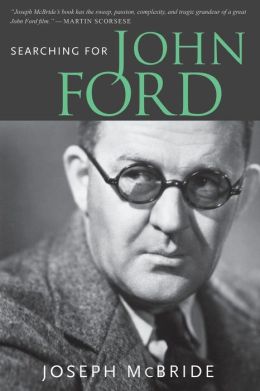
Though I have mentioned a few books in my movie review posts -- titles like Searching for John Ford, Joseph McBride's biography of the influential director, More Than Night, James Naremore's brilliant exploration of film noir, and Unruly Girls, Unrepentant Mothers, Kathleen Karlyn's insightful feminist overview of contemporary cinema -- I haven't really written any bona fide film book reviews for this blog to date. That will now change since I am most excited to tell you about Simon Callow's wonderful multi-part biography of Orson Welles.

Part of what compelled me to race through that first lengthy (650-page) volume is Welles himself -- influential film artist, larger-than-life personality, iconic entertainment figure, and, most interestingly, a multi-faceted, internally contradictory, delightfully puckish trickster and raconteur of the first order. Welles is simply fascinating and so too is that book about his early years in the theater, his exploits on the radio including War of the Worlds, and the events leading up to the release of Citizen Kane in 1941.
Yet Callow's remarkable prose also accounts for the "page-turner" quality of Xanadu and the subsequent volumes of his Welles biography, which include Hello Americans (Penguin Books, 2007), One Man Band (Jonathan Cape, 2015), and a forthcoming, as yet untitled fourth volume. No doubt about it: Callow is a flat-out excellent writer.
Here, for example, is an excerpt describing Welles from the preface to the latest volume, One Man Band:
His energy is astonishing and unceasing. But it would not be correct to describe him as a driven man, a Dickens or a Laurence Olivier -- men whose goals were clearly defined, and whose very lives seemed to depend on achieving them. [. . .] With Welles there was simply a constant supply of energy which could be squandered on anything; he seemed to give himself with equal fervour to all of his projects, whether vaudeville, radio comedy or filming the classics. (p. xvii)Succinct, clear, yet so evocative. Great stuff.
I am only a quarter of the way through One Man Band (which I received for Xmas this year) as I post this. The volume covers an especially tumultuous time in Welles' life and career, his European "exile" period when he truly became an independent filmmaker working (at least in a directorial capacity) completely outside the Hollywood system (with the exception of 1958's Touch of Evil). Callow's heady, montage-like approach, interweaving and juxtaposing fragments of information and analysis to expressionistically suggest a larger whole, suits this period's rootless and feverish tenor.

One of the best Xmas gifts I got this year: the hardcover edition of One Man Band.
The central thesis of Callow's biography is that Welles was a relentless experimenter -- for Welles, process was everything. This is one reason why so many of Welles' films never got finished, or got changed by studios without Welles' consent: because he just didn't care all that much about the finished product, especially if it was being contractually demanded or creatively influenced by some outside entity like a producer or a studio. As Callow writes in the closing paragraph of Hello Americans:
Any form of limitation, obligation, responsibility or enforced duty was intolerable to him, rendering him claustrophobic and destructive. He could only function as a free agent, untrammelled by partners, children, wives, administrators, accountants, producers, studios, political mentors. [. . .] In terms of his work as a director, that meant that he had, inevitably, to become an independent film-maker. Confinement, whether personal or professional, was unbearable to Orson Welles. His exploratory urges were central to his nature; he indulged them unceasingly for the rest of his life. Occasionally, something close to a masterpiece would result. But that was not the purpose of his journey through life. The doing was all. (p. 444)If this sounds a bit grandiose, perhaps it is. Welles possessed a grandiose persona and Callow, with his theatrical background and flair for the rhythm of words, tends to convey information dramatically. As a lover of melodrama and appreciator of hyperbole, I enjoy Callow's somewhat purple style -- it works beautifully for me.

Callow's theater background lends a dramatic quality to his prose but also qualifies him to speak most insightfully about Welles' approaches to acting and directing.
But lest you think these tomes are simply full of adulating macro-observations about Welles, check out Callow's discussion of the director's incessant need to introduce an atmosphere of chaos and instability into his film sets:
[Welles] would call the entire crew and actors for nine in the morning, and then show up at six in the evening surrounded by pretty women and a chap playing the accordion. 'What can you do with a man like that?' asked [Othello cinematographer Alvaro] Mancori plaintively. It takes a nearly superhuman level of chutzpah to behave in this fashion on a film set, which at the best of times is a seething mass of resentments and mutinies waiting to happen. It is a gauntlet thrown down, an explicit assertion of personal status, which says: 'Defy me if you dare.' It is behaviour designed to provoke. And provocation was one of Welles's central strategies -- a technique, in fact. 'If everything's going well,' said [art director Alexandre] Trauner, 'you can rely on him to come up with something that throws everything into doubt. It's subconscious.' It is a tactic that breeds adrenalin and counteracts complacency; it was deeply embedded in Welles's temperament. (One Man Band pp. 46-7)Notice how Callow moves from the particular -- Welles' outlandishly rude and childish behavior on the set of Othello circa 1950, and Mancori's exasperated yet resigned response to it -- to a broader analysis of how Welles' eccentric, childlike behavior is somehow fused to his artistry, hardwired into the core of this despotic yet brilliant man who created so much great cinema, radio, and theater. While Callow rarely gives exact dates and provides no clear over-arching timeline for Welles' activities, he does zero in on key incidents like this that give a taste of what it was like to work alongside Orson Welles. Nearly every paragraph begins with observation then plunges into deeper analysis.

My love of Callow's books may reflect my preference for this artsy, Werner Herzog-ian search for "ecstatic truth" over a strict recounting of facts. Don't get me wrong, I have read several extremely factual (some would say dry) film business books in my day -- Memo from David O. Selznick (ed. Rudy Behlmer, Modern Library, 2000) leaps to mind, as does Tino Balio's amazing political-economic history United Artists: The Company that Changed the Film Industry (U. of Wisconsin Press, 1987). These are incredible, eye-opening books but they are very thorough, detail-laden works about the business side of the film business, not (primarily) breezy dishes on scandal, stardom, or film artistry.*
In his Welles biographies, Callow foregoes certain details (day to day accounts of life on the set, much of anything about Welles' personal/home life) and foregrounds others (Welles' approach to directing and acting, his professional and artistic relationships and rivalries) in order to capture, as he says, "an impression of how Welles moved through life" as a mercurial, vital artist and an erratic, negligent businessman. This feature makes Callow's books stand out and, as I've said, makes them enormously readable.
I recommend starting from the beginning with The Road to Xanadu and reading all of these suckers in order, but if you don't think you can commit to that, I recommend beginning with Volume Two, Hello Americans, which documents Welles' activities from just after the release of Citizen Kane in 1941 until he departs for Europe in 1947. It discusses a concise seven-year segment of Welles' life, after he started making movies, and it is (mainly) set in the U.S.A. -- though some of the most compelling stuff in the book centers on his stint as a quasi-documentarian in Brazil. Start there and then if you're convinced, go back and read Xanadu, which is mostly about Welles' early love of and extraordinary early work in the theater.
Or maybe just jump right into the third volume, One Man Band. Why not? Callow's writerly voice remains potent and his grasp of what makes Welles tick only seems to have deepened and taken on new layers since he wrote Xanadu twenty years ago. Hell, with a newly restored print of Chimes at Midnight now circulating in the U.S., now's the time to read up on the story of that film's creation, recounted in the last third of One Man Band.
Then again, one's understanding of Welles's European period, which One Man Band recounts, would be greatly enhanced by knowing which factors in his meteoric American rise eventually sent him there. So maybe it's best to read at least one of the first two volumes first -- The Road to Xanadu might be especially crucial since it covers Welles' creatively fertile radio years and the production of the debut film which would (for better or worse) forever define him, Citizen Kane.
In any case, the final word: you cannot go wrong reading Callow's biographies of Welles.**

Orson the cat loves reading books about the inner workings of the film business.
Bonus Afterthought: Beyond Callow's first three volumes, I have only read three other books about Orson Welles.
James Naremore's oddly titled The Magic World of Orson Welles (U. of Illinois Press, revised edition 2015) centers its analysis on the films only, and is highly recommended for those seeking insightful film interpretation without much biographical material. Naremore is simply one of the best scholarly film writers around.
However, the (as far as I can tell) undisputed master of understanding Welles and his work from the point of view of a professional film critic is Jonathan Rosenbaum. I strongly recommend Discovering Orson Welles (U. of California Press, 2007), Rosenbaum's collection of superb Welles-related essays. The whole book is top-notch, though I would single out chapter 15, "The Seven Arkadins" (available in revised and updated form here) as a particularly essential piece of Welles criticism.
See also Rosenbaum's thoroughgoing and informative reviews of various books on Welles, available piecemeal as this online review*** plus chapters 9, 12, and 13 of Discovering Orson Welles.
James Naremore's oddly titled The Magic World of Orson Welles (U. of Illinois Press, revised edition 2015) centers its analysis on the films only, and is highly recommended for those seeking insightful film interpretation without much biographical material. Naremore is simply one of the best scholarly film writers around.
However, the (as far as I can tell) undisputed master of understanding Welles and his work from the point of view of a professional film critic is Jonathan Rosenbaum. I strongly recommend Discovering Orson Welles (U. of California Press, 2007), Rosenbaum's collection of superb Welles-related essays. The whole book is top-notch, though I would single out chapter 15, "The Seven Arkadins" (available in revised and updated form here) as a particularly essential piece of Welles criticism.
See also Rosenbaum's thoroughgoing and informative reviews of various books on Welles, available piecemeal as this online review*** plus chapters 9, 12, and 13 of Discovering Orson Welles.

Lastly, I want to mention a book I have not yet read, but that almost surely will be the next Welles-related work I pick up: Alberto Anile's Orson Welles in Italy (trans. Marcus Perryman, Indiana University Press, 2013) Callow himself repeatedly draws from and acknowledges this book in One Man Band, and there seems to be some critical buzz around this essential tome that "gives us a more detailed impression of a great artist in the midst of a gruesome spell, and entertains in the process."

"It is characteristic of many of Welles's commentators that they select one or other of the many Welleses as quintessential, but the mystery of the man is that all the Welleses coexist; all are true."
--Simon Callow, One Man Band p. 108
--
* Anyone familiar with Golden Age uber-producer David O. Selznick knows that he was deeply involved in the day to day creative doings of every film he worked on. Therefore Memo from David O. Selznick, an edited collection of Selznick's famous, enormously detailed memos spanning his entire career, reveals the intersections between commerce and artistry in unique and fascinating ways.
** Unless you really need to know facts and dates and production schedules in order to be satisfied. In which case I assume Joseph McBride's What Ever Happened To Orson Welles? (U. Press of Kentucky, 2006) is an excellent choice. You can read Callow with a grain of salt then compare what he says and thinks about Welles to McBride's or Rosenbaum's take. Also see Wellesnet for all the latest Orson Welles-related news.
*** Also available as Chapter 20 of Discovering Orson Welles.