Sunday, April 6, 2014

EW #6: It's a Wonderful Life (1946)

Many people remember It's a Wonderful Life mainly for its happy ending.

I should come right out and say that in general, I am not the biggest fan of Frank Capra's work. He is a very skilled and talented director, to be sure, but there is something about many of his films' "aw, shucks" style of crude populism that rings false and even feels ideologically dangerous to me. I am in agreement with Mark Harris when he says of Capra's onscreen politics that they are marked by "a kind of  easy yahooism" that reflects the Italian-American immigrant director's "overheated and erratic political impulses." *

That said, I have come to really appreciate It's a Wonderful Life over the past several years, not so much for its overt message "about how hard it is to see the magic of life as we're living it" (as Entertainment Weekly cheerily puts it) but rather for its subtext about how our inflated sense of self-concept often blinds us to the fact that, as the Buddhists say, "life is suffering." For me, Life is about how profoundly off-base and un-self-aware George Bailey is throughout most of his existence, and how this only increases his dissatisfaction with what is, in the end, a pretty limited set of life choices. He imagines himself as a man of action, an adventurer, a man destined to see the world and do great things. Instead, he is just an average schmuck who is so fearful of leaving Bedford Falls or taking real risks or letting his late father's business collapse that he ends up right where we'd expect him to: in Bedford Falls, paternalistically protecting his family, friends, and community just like he has done since childhood.

And there is nothing wrong with this. I find Life's somewhat neorealistic** ideology to be a welcome change from the relentless Pollyanna-ism of, say, Capra's 1939 film Mr. Smith Goes to Washington. If Mr. Smith naively suggests that the little guy can make a difference if he just does what's right and follows his heart -- a comforting, if bullshit, message -- Life suggests that the average guy won't really accomplish jack shit or make any major changes in life at all, but that that is to be expected. I think a little "reality principle" injected into a Hollywood film like this is a good thing; it constitutes a real breath of fresh air.

The real power of It's a Wonderful Life is its unrelenting look at the 
stultifying, soul-crushing aspects of small-town American values. 

Now many might resist my dark reading of this beloved film and interpret George Bailey's successful holding action against the vile capitalist Potter as a heroic accomplishment. According to this reading, George's community's love for him is a justly deserved reward for his heroically protecting them from Potter's exploitation. Superficially, this is accurate: Potter is indeed the film's main villain and the nightmare version of Bedford Falls that Bailey sees when Clarence the Angel shows him around near the end of the film is called Pottersville, a stark, hostile urban space symbolizing the "dark underside of Hollywood ideology" that looks like it came out of a film noir.*** Some would say that that nightmare vision is just that -- a vision -- and that it is wiped away or obliterated by the supposed "real world" of a restored Bedford Falls in the film's denouement. Yet I am inclined to agree with Rich Cohen when he writes that Life is actually a "terrifying" movie whose dark undertones are not erased by Bailey's temporary stymieing of Potter or the film's stock ending: "I do not think the hidden message vanishes when the movie goes Hollywood and happy. I believe the resolution of the darker movie is, in fact, still there, wrapped around the happy ending of the classic."

Indeed. And that darkness, that grim tale of "the good man driven insane," all the way to suicide, is what makes Capra's "holiday classic" stick with me. It is an extremely bleak film for the normally upbeat Capra to have made. And if its pull back from the edge at the last minute feels a little hollow or contrived -- which it does to me -- it is because of the film's admirable willingness to look at the exploitative and soul-crushing dimensions of small-town American capitalism square in the eye for the preceding two hours of its runtime. Like Citizen Kane and The Godfather, It's a Wonderful Life tells us something essential about American life precisely because, unlike so many other lesser films, it documents the life of a relatable and sympathetic man who, in the end, fails miserably. It is an American tragedy and, mainly for that reason, an enduring work of art, because its tragic dimensions balance out Capra's usual giddily populist impulses to make It's a Wonderful Life so much more than the sentimental film that a literal reading of its (ironic) title would suggest.

Plus, Wonderful Life features my all-time favorite character actor, Thomas Mitchell.   

--
* Harris, Five Came Back pp. 66, 67.
** I refer mainly to Italian neorealism, which was just getting started around the time Capra made Life, but you can also learn about the legacy of neorealism by reading this A.O. Scott article.
*** Robin Wood, "Ideology, Genre, Auteur" p. 673.

Friday, April 4, 2014

Review: Nebraska (2013)

Bruce Dern as Woody in Alexander Payne's amazing, downbeat comedy Nebraska.

I saw Alexander Payne's latest film, Nebraska, a couple of weeks ago, and I was blown away. It was completely delightful and satisfying, definitely the most enjoyable filmgoing experience I have had in quite some time. I was utterly enchanted the whole way through. With the exception of one extraordinarily minor hiccup, to which I will return, the film was flawless. I strongly suspect that Bruce Dern's lead performance was the best performance by a Hollywood film actor last year.*

Up until I saw Nebraska, I would have said that director Payne's best film (by a long shot) was 1999's Election, a razor-sharp, expertly wrought satire starring Matthew Broderick and Reese Witherspoon. Election is one of my all-time favorite comedies, and while it technically did not make my (arbitrary and bullshittish) top 40 films list back in November, it probably should have.

In addition to Election, I would single out Citizen Ruth (1996), another hilarious and intelligent satire, as the other standout entry in Payne's body of work, which also includes such films as Sideways (2004), About Schmidt (2002), and The Descendants (2011). Of those three, the latter is my favorite, though I think it is a bit lopsided and uneven: Descendants starts out foregrounding the voice and point of view of the youngest daughter, Scottie (Amara Miller), but then shifts partway through to become exclusively focused upon Matt (George Clooney) and, to a lesser degree, Alexandra (Shailene Woodley). What happened to Scottie's interesting point of view? It just inexplicably fades away, to the film's ultimate detriment.

Despite these potential weaknesses, however, I still found The Descendants to be much more rich, interesting, compelling, and character-driven than either Sideways or About Schmidt. I just did not click with Sideways and have never understood its (cult) popularity. I liked Thomas Hayden Church's performance in it but little else; the movie struck me as an overdramatic paean to white masculinity, and while I assume it was intended as satire, the satirical elements just did not land for me, so it felt overwrought and false. About Schmidt is Payne's most uneven and aimless film, a tale about an aged retiree (Jack Nicholson) who goes on a road trip for some reason I cannot now recall. In retrospect, thematically at least, Schmidt feels like an early dry run for the vastly superior Nebraska.

Nebraska is simply pitch-perfect, with superb casting and memorable, funny, and moving performances by all its principle cast members: Dern, Will Forte, June Squibb, Bob Odenkirk, and longtime personal favorite Stacy Keach. Dern's Woody is cantankerous and crusty, but not in the stereotypical or predictable ways you might imagine. What slowly comes out over the course of the film, always subtly, never with a heavy hand, are the ways in which Woody has suffered, yes, but also the ways he has found to be consistently generous and loving toward those around him. Similarly, what at first appears to be a cliched, antagonistic relationship between Woody and his domineering wife Kate (Squibb) is revealed (slowly and surely) to be a relationship of surprising depth and largely unexpressed yet palpable tenderness. Kate's last scene in the film is one of the most touchingly rendered moments of love I have seen in any film for many years.

In a movie full of knockout performances, Dern and Forte sparkle 
as Nebraska's central odd couple. 

Although the film sports many top-notch supporting performances -- Odenkirk, for example, is perfect as the taciturn yet not quite prickly older brother -- Nebraska mainly belongs to Dern and Forte, who make a wonderful road-movie odd couple. I am not familiar with Forte's prior work on SNL, but he shines here as a patient, hangdog, and ultimately quite noble younger son who goes the extra mile (literally and figuratively) to learn more about what makes his verbally reticent father tick. Forte's David is our onscreen proxy, he makes Woody accessible to us, and his droopy, melancholy eyes alone are enough to draw us in and make us feel for this somewhat drifting and lost soul. Despite his initial exasperation with Woody's antics, it turns out that David needs his father at least as much as the latter needs him; aiding Woody in his quest to reach Lincoln, Nebraska helps David get focused on what really matters to him, which is his family ties.

Lest I have made Nebraska sound too heavy or sappy, it isn't; in fact, it is one of the most wry and funny movies I have seen in years, and Payne's funniest since Election. It is mainly a comedy that periodically drifts into dramatic territory, but always with subtlety and a light touch. Even in its serious moments it is more nostalgic and wistful than melodramatic. Between its brilliantly paced script and beautiful black and white cinematography, Nebraska ultimately evokes a deep appreciation for how the past, while far from being a trap we cannot escape from, nevertheless shapes every aspect of who we are in the present. The Grant family -- largely, it turns out, through Kate's agency -- have escaped the stultifying mire of small-town life in Hawthorne, Nebraska and have moved on, yet, as the film shows, revisiting and remembering where they came from gives them unique and crucial insights into how they interrelate (or have failed to interrelate) in their new life in Billings, Montana.

If Nebraska has one flaw, it is in how it handles one single moment in one of its climatic scenes. I will keep this review spoiler-free, but suffice to say that I would have liked to see David handle his final confrontation with Ed Pegram (Keach) a wee bit differently. Although the audience I saw the film with gave subdued cheers and applause during that scene as it is, I would have liked to see a little more restraint exercised in that scene; it felt like the one moment in the whole film that might be tonally out of step with the whole.

But that is a minor quibble about a film that is surely Payne's best movie to date and also one of the best films of last year. Had I seen Nebraska early enough, before I wrote my end-of-2013 roundup, it would have been discussed alongside 12 Years a Slave and Spring Breakers as one of my very favorite films of 2013. I simply cannot recommend it highly enough -- it is everything that great, moving, delightful, thoughtful, humanist cinema should be. The American cinema -- and the world -- would be a better and more enjoyable place if there were more beautifully crafted, funny, and subtly profound films like this one.**

Probably the most hilarious supporting characters in Nebraska are these two 
ne'er-do-well cousins of David's. "Three days!!"

--
* Though I have no critical respect for the Academy Awards -- since they primarily measure which mediocre films of the past year conducted the best behind-the-scenes Oscar campaigns -- I am nevertheless using them as a yardstick here, and since I have not yet seen McConaughey's Oscar-winning performance in Dallas Buyer's Club, I feel I should not unequivocally declare Dern's performance the best one. But I have a feeling that Mr. Dern was unjustly robbed at the Oscars.
** One reason (among many) there needs to be more films like Nebraska is due to its focus on the lives and concerns of older people. There are so few good films addressing that demographic, and to get such a funny and revealing peek into the lives of characters like Woody and Kate is an all-too-rare treat seldom to be found in Hollywood's youth-obsessed fare.

Friday, March 14, 2014

EW #5: Psycho (1960)

Anthony Perkins as Norman Bates in Psycho.

I should mention up front that I am quite favorably biased toward this film; it is one of my all-time favorites.

It is impossible to discuss Alfred Hitchcock's Psycho without first discussing Michael Powell's Peeping Tom (1960); the two are closely related cinematic doppelgangers. Peeping Tom was released in Great Britain several months before Psycho's U.S. release, and what happened to Powell's film proved a valuable lesson for Hitchcock. Peeping Tom depicts several weeks in the life of a cameraman / serial killer named Mark, whose murders are depicted in shocking first-person point-of-view. The film's opening moments consist of just such a disturbing sequence; Peeping Tom provides a prototype for the lengthy, handheld, first-person murder sequence that opens John Carpenter's Halloween eighteen years later. Adding to its gruesomeness -- and unlike Psycho -- Peeping Tom is shot in color.

It turns out that the British public, and especially the press, was not ready for such an explicit indictment of the close connections between cinematic voyeurism, desire, and murder in April 1960. Peeping Tom was roundly condemned by the London press and director Powell was blacklisted.*

Carl Boehm as Mark Lewis, protagonist of Peeping Tom and 
an important precursor to Norman Bates.

Hitchcock, preparing to premiere Psycho in the United States in June 1960, observed what happened to Powell as a result of Peeping Tom's disastrous critical reception, and made a key decision that there would be no press screenings for Psycho. Powell's film had made clear to Hitchcock that he needed to get his own very similar film in front of paying audiences before the critical establishment had a chance to condemn it for its provocative shower sequence, (relatively) sympathetic portrayal of a serial killer, and -- gasp! -- the first-ever depiction of a flushing toilet in a Hollywood film.

Of course, Hitchcock's release strategy for Psycho, which included lobby posters urging filmgoers to keep the film's narrative twists secret and a mandate that no exhibitor allow anyone into a screening of the film after it had begun, were also part and parcel with his general flair for showmanship and his interest in delivering maximum thrills to his audiences. However, the British reception of Peeping Tom also factored into Hitchcock's decision to enact these measures, and in many ways Powell's equally frightening and masterful film deserves kudos for "taking the hit" with the British public on Psycho's behalf.

Regarding Psycho, there isn't much I can say about this enormously influential film that hasn't already been said by smarter writers. Psycho is probably the most-written-about English-language film of the sound era.** It has been claimed as the first slasher horror film, or at least the structural prototype for that enduring subgenre. It also represents the apotheosis of Hitchcock's career-long obsession with point-of-view: the opening sequence alone, in which the camera pans over a Phoenix cityscape and then tracks into a window to find Marion Crane trysting with her lover Sam, implicates the viewer in an act of sexually charged voyeurism more explicitly than does any previous Hitchcock work. Then, when Psycho switches our onscreen point of identification from Marion Crane to Norman Bates about thirty minutes in, it revolutionizes the thriller genre and changes the rules for cinematic identification and point of view from this point forward. The first-person point-of-view camera work that pervade influential slashers Black Christmas (1974) and Halloween (1978) are made possible via the example and influence of Psycho. 

Vera Miles as Lila Crane, one of the great Hitchcockian female detectives.***

The film itself is an utter delight. While some critics, Robin Wood among them, claim that only the first twenty-five minutes of Psycho (up to and including the shower scene) is worthy of true "masterpiece" status and that the second half loses focus, I contend that the whole damn thing hangs together beautifully. It is true that once Marion (Janet Leigh) leaves us, her narrative function is taken over by a diffuse ensemble including boyfriend Sam (John Gavin), sister Lila (Vera Miles), and private detective Arbogast (Martin Balsam), all of whom pale in comparison to Perkins as Bates. That Bates is the most interesting character left alive at that point is Hitchcock's whole purpose, but I can see where the lack of a clear "good guy" (or gal) would be off-putting for some viewers.

Simon Oakland as Psycho's much-maligned psychiatrist.

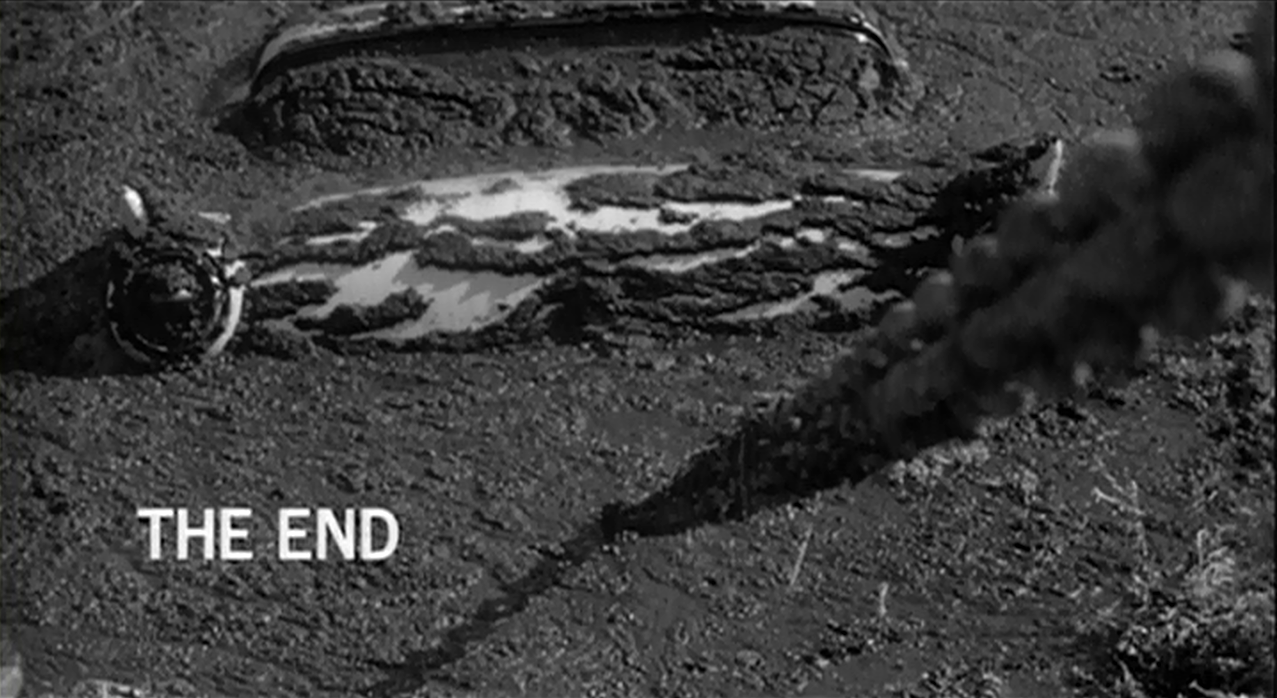
It is also true of Psycho that the psychiatrist scene near the end does slightly impede the momentum of the film's last seven minutes or so. Yet I think the psychiatrist scene is necessary for setting up the penultimate shot of Norman/Mrs. Bates in the asylum, and that makes it all worth it. Not to mention that Hitchcock gets in one last dig with the film's true final shot: Marion's car being dragged up out of the swamp. The film begins and ends with Marion.


In any case, Psycho is doubtless the Hitchcock film I have watched the most number of times, and alongside Vertigo (1958), Shadow of a Doubt (1943), The Birds (1963), Rope (1948), and Frenzy (1972), it probably stands as my favorite Hitchcock film. It definitely belongs on Entertainment Weekly's -- or anyone's -- list of "All-Time Greatest Films." I might even bump it up a few slots to #2 or #3.

Bonus Afterthought: Two different behind-the-scenes dramatizations of Hitchcock's late career, The Girl (dir. Julian Jarrold) and Hitchcock (dir. Sacha Gervasi) were released in 2012. Although some critics find something to enjoy in the factually inaccurate and emotionally lackluster Hitchcock, I must cast my lot with those who find it to be the cinematic equivalent of a badly-shaped piece of dung. I normally like Anthony Hopkins, but his performance in Hitchcock feels phoned-in and misses Hitch's real-life deliberate speech mannerisms. The whole film is a shoddy affair from tip to tail, very badly done, and I cannot recommend it. By contrast, The Girl is flat-out excellent. Toby Jones plays a much more interesting and convincing Hitchcock than Hopkins does and the film is far better made than Hitchcock on all fronts. Plus The Girl puts forth a provocative thesis: it assumes that Hitch was erotically interested in The Birds' leading lady Tippi Hedren and that he actually made inappropriate moves on her. While that has never been concretely established, I think some lecherous tendencies probably existed in Hitchcock and I like the film's willingness to explore that dark side of him, connecting it to how he treated the (post-Grace Kelly) platinum blondes in his films. I recommend The Girl to anyone; it is artfully shot, energetically acted, well-scripted, and well-paced, especially compared to the much more predictable and dull Hitchcock.

Toby Jones as Alfred Hitchcock and Sienna Miller as Tippi Hedren 
in HBO's excellent The Girl.

--
* From A Very British Psycho (1997, dir. Chris Rodley), a documentary found on the Criterion Collection DVD of Peeping Tom. This documentary reveals that Powell's career in England ended due to Peeping Tom and that he emigrated to Australia soon after its release.
** A short list of key scholarly titles about Hitchcock and Psycho includes Tania Modleski's The Women Who Knew Too Much, Robin Wood's Hitchcock's Films Revisited, Deutelbaum and Poague's A Hitchcock Reader, Kaja Silverman's The Subject of Semiotics, Stephen Rebello's Alfred Hitchcock and the Making of Psycho, and one chapter in Alexander Doty's Flaming Classics.
*** See also Young Charlie in Shadow of a Doubt, Lisa Fremont in Rear Window, Barbara Morton in Strangers on a Train, and the second Mrs. de Winter in Rebecca for more examples of this type.  

Monday, March 10, 2014

Overlooked Directors: Jake Kasdan

The talented Mr. Jake Kasdan.

Jake Kasdan, the son of famed 1980s Hollywood screenwriter (The Empire Strikes Back, Raiders of the Lost Ark, Return of the Jedi) and director (Body Heat, The Big Chill, Silverado, Grand Canyon) Lawrence Kasdan, has established a stellar track record directing quality television comedies and wonderfully sharp mid-budget films since the late 1990s. Let's run down a short list of the younger Kasdan's must-see directorial triumphs:

Ben Stiller and Bill Pullman in Zero Effect, Jake Kasdan's directorial debut.

Zero Effect (1998) is a wonderful detective story / comedy, which I have been told is a loose adaptation of the Sherlock Holmes story "A Scandal in Bohemia" -- a fact I did not recognize since I am unfamiliar with that specific Holmes tale. But whether or not you are familiar with the source material, this is a delightful, well scripted and well acted buddy film that pairs eccentric genius detective Darryl Zero (Bill Pullman) with his uptight, long-suffering assistant Steve Arlo (Ben Stiller). These two have great comic chemistry together, and as usual, Kasdan finds time for some truly poignant character moments in between all the twisted plotting and zany antics. After The TV Set this is my second-favorite Jake Kasdan film.

The stellar cast of Freaks and Geeks.

Freaks and Geeks (five episodes, 1999-2000) -- Kasdan was a consulting producer on the series as well as director of several episodes including the pilot and the terrific "Beers and Weirs" episode. Freaks and Geeks is, quite simply, one of the finest "dramedies" ever aired on television, painting a squirmingly hilarious portrait of many of the serious trials and tribulations high schoolers endure. It also captures the historical moment in which it is set -- the year 1980, before "the 1980s" as we know them now truly set in -- perfectly (yes, I remember 1980). And while much of the credit for the series' brilliance goes to creator Paul Feig, executive producer Judd Apatow, the entire writing team, and the stellar cast, Kasdan was surely a key player in the success of many key episodes -- including the penultimate (and possibly his best) one "The Little Things" -- and the series as a whole.

Jack Black stars opposite Colin Hanks in Orange County.

Orange County (2002) is perhaps a lesser work by the younger Kasdan, as it lapses into some overt sentimentality atypical of the director's work. It also provides a fairly thankless role for Schuyler Fisk as Ashley, our protagonist Shaun's (Colin Hanks) girlfriend. She is too perfectly and consistently supportive of Shaun to be completely believable, and therefore comes off as a bit two-dimensional (where's the conflict?). But despite these relatively minor niggles, there is much to enjoy here, including Jack Black's turn as Shaun's slacker brother Lance, and a happy ending that does -- sentimentality aside -- feel earned.

Sigourney Weaver in Jake Kasdan's satirical masterpiece The TV Set.

The TV Set (2006) is Kasdan's masterpiece, a razor-sharp satire of the television industry with standout performances by the entire cast, including David Duchovny, Sigourney Weaver, Ioan Gruffudd, and Judy Greer, among others. Based loosely (I presume) upon the real-life trials of Judd Apatow during his years on Freaks and Geeks and other programs, this hilarious film depicts show creator Mike Klein's (Duchovny) attempt to get his TV pilot The Wexler Chronicles produced and picked up for broadcast by a network helmed by mercenary executive Lenny (Weaver). The latter's performance alone is worth watching the movie for, as she takes the kind of cutthroat character she played in 1988's Working Girl and ramps it several more notches, into truly "unhinged" territory. Also noteworthy is Fran Kranz as talentless actor Zach Harper, the other major foil to Klein's plans and visions for his precious pilot. An overlooked gem, The TV Set is literally one of my all-time favorite movies and I simply cannot recommend it highly enough.

David Duchovny stars as The TV Set's Mike Klein, 
an onscreen proxy for real-life writer / producer Judd Apatow.

In short, if you only check out one Jake Kasdan film, make The TV Set the one.

"The Beatles" as they appear in Walk Hard.

Walk Hard: The Dewey Cox Story (2007), while not my favorite Kasdan film, is surprisingly funny and enjoyable given its premise, and sits head and shoulders above other similar "fake biopic" style comedies like Talledega Nights and Anchorman. If you have given this film a pass due to its promotional materials, you may be denying yourself some delightful comedy fun here. But I wouldn't prioritize seeing this above seeing The TV Set or Zero Effect.

Coming soon: Jake Kasdan's next directorial feature is Sex Tape starring Jason Segel and Cameron Diaz, due out in 2014.

Darryl Zero sez: "Check out these movies . . . they're devilishly funny!"

Saturday, March 8, 2014

Review: American Hustle (2013)

The cast of American Hustle, who are inconsistently directed 
in this sprawling mess of a film. 

I finally saw David O. Russell's American Hustle, a week after it was snubbed in all categories at the Academy Awards, and to be blunt, I was mostly underwhelmed. I really enjoyed a few of the performances, especially Christian Bale's, but I thought the film was extremely uneven and, despite a few glimmers of genuine fun, mostly quite boring. In my view, Hustle is another entry in the "my post-Huckabees career sucks" phase of Russell's tumultuous directorial trajectory, and herein I will attempt to briefly explain why.

See, I am a huge fan of Russell's pre-2010 work; while his 1994 debut Spanking the Monkey isn't for everybody, I think Flirting with Disaster, Three Kings, and especially I Heart Huckabees are all just terrific. I would even call Huckabees a contemporary dark-comic masterpiece, surely Russell's most compelling and wickedly enjoyable film to date.*

Yet as this article documents, Russell seems to have been severely humbled and discouraged after Huckabees failed to hit big in 2004, and nowadays, in order to keep working in Hollywood, he has "fully accepted the ideology of an increasingly risk-averse industry that making unconventional, brazenly original work is somehow patently offensive and selfish." This seems to square with how Silver Linings Playbook and American Hustle both strike me: as slightly offbeat yet extraordinarily conventional, even formulaic films that lack any of the remarkable, genre-mashing freshness of Russell's earlier work. For example, Linings is a totally by-the-numbers, male-centered romantic comedy with an unbalanced weirdo as its male lead -- if you like that film, you'd probably be better off seeing Punch-Drunk Love or even Safety Not Guaranteed -- and Hustle is a tonally disorganized mess trying to be a crime film. Don't get me wrong, I can find things to enjoy in Russell's recent movies. It is obvious that the man still cares about what he does, and that he can surely direct individual scenes very capably. It's just that he isn't pushing himself very hard or reaching very far artistically anymore, and that lack of risk-taking or striving seems to be causing him to go a little stir-crazy within the narrow narrative and generic parameters he has now accepted for himself.**

So, American Hustle. I frankly could not tell if this film was supposed to be a "real" heist film or a parody of one. Unlike Martin Scorsese's GoodFellas, to which this film owes an obvious debt, Hustle fails to blend its moments of comedy with its moments of gravitas with much effectiveness or consistency. For example, the character of Carmine Polito (Jeremy Renner) is mostly played straight, and Bale treats Irving Rosenfeld, his own somewhat humorous yet likable character, with some nuance, but Richie DiMaso (Bradley Cooper) is a ridiculous caricature of an FBI agent that seems to be visiting the Hustle set from an entirely different (comedy) movie. It is impossible to accept his feelings as real because every moment involving him -- comedic or faux-tragic -- is overplayed to the point of parody. This is not Cooper's fault; it is in the script or (more likely since so much of the film was improvised) the direction.

In short, in terms of tone, Hustle is a convoluted mess. The crowning moment of failure for me, the moment I knew the whole thing was broken, is when an extraordinarily iconic actor strongly associated with the 1970s gangster genre shows up in a cameo. Without spoiling things by naming him, I will simply state that his appearance is so distractingly inappropriate that I became totally convinced at that point in the proceedings that Russell had indeed intended to make a parody film but had simply not made it funny enough to make its parodic intent consistently clear throughout.

 Amy Adams and Christian Bale give the two best performances in Hustle, allowing for occasional moments of wackiness within otherwise believable characterizations.

Unfortunately, though, I don't think parody is what was intended, as the performances by the film's two leading ladies seem to indicate. Amy Adams' Sydney is especially believable and relatable, and, along with Bale's and Renner's characters, really grounds this movie -- to the extent that something this uneven and inconsistent can be grounded. Jennifer Lawrence's Rosalyn is an extreme character as written, but is played well, and should have been the most batshit-crazy element in an otherwise more lived-in set of performances. But unfortunately, Cooper's Richie out-histrionicizes Rosalyn at practically every turn, and that imbalance, combined with too-excessive "1970s" mise-en-scene and several pointlessly heavy-handed musical montages, contribute to the overall feeling of over-the-top incomprehensibility here. What this film really needs is some toning down of the acting and set design, and a couple more editing passes. Trapped somewhere inside the bloated American Hustle we were given is a really delightful 90- to 100-minute heist film parody, and that is a movie I would really like to see.***

Did I enjoy some moments in American Hustle? Yes, for sure, especially when Bale was onscreen. But were there at least as many moments of baffling incomprehensibility, careening shifts in tone, and outright boredom as there were enjoyable ones? Yes.

Do I want the David O. Russell who made I Heart Huckabees back? You bet.

UPDATE 3/5/2016: Look, even Amy Adams hates this movie!

UPDATE 7/2/2016: Film Crit Hulk shares my disdain for American Hustle, arguing that "THERE IS ALMOST NO REAL CHARACTER SEQUENCING OR MEANING OR IMPORT OR THEMATIC COHESION OR DIRECT PURPOSE TO MOST OF THE SCENES IN AMERICAN HUSTLE." His insightful piece outlines director David O. Russell's mid-career about-face in much greater detail than I could, calling the disappointing second half of Russell's career a "FALLRISE" -- "THE WORD FOR A FILMMAKER WHO HAS FALLEN FROM THE NOBLE, EMBATTLED GRACES OF PURE ARTISTRY AND IS WHOLLY REWARDED FOR IT." Hulk concludes that Russell's recent work "FEELS LIKE A WORLD CHAMPION CHESS PLAYER THROWING A GAME TO A 10 YEAR OLD." Sad but accurately said!

--
* To be fair, I haven't yet seen Russell's 2010 film The Fighter, so cannot judge it for myself or factor it into this sweeping claim.
** I recognize the irony of calling a man like Russell -- known for his extreme intensity on set in the early days -- "stir-crazy" now that he has noticeably mellowed in terms of his process. What I mean here is that he has gone artistically stir-crazy, he is eating his own tail and losing focus now that he is no longer pushing himself creatively.
*** For example, much as I enjoyed them in and of themselves, every single scene with Louis CK should have been cut from Hustle, as those scenes did practically nothing to move the film forward and only contributed to the out-of-place ridiculousness of Cooper's FBI agent character.

Saturday, December 28, 2013

End of the Year Roundup

Spring Breakers, the most artful, sublime, and culturally savvy film I saw this year.

I prefer to call this end of the year reflection a "roundup" because I am somewhat opposed to the idea of "best of" lists or even the idea of "best" when applied to works of entertainment or art in the first place. These things are so damn subjective that, although I am surely subject to my own outbursts of praising or condemning hyperbole when discussing cinema, I do not wish to convey that I place much faith in rankings of "best films" whether such lists are composed by me or by others.

All that said, I understand the compulsion to collect one's thoughts at the end of a year and to make some kind of temporarily definitive statement about the highlights of one's moviegoing experiences in the 365 days just passed. So with that in mind, and in no particular order, here are some of the most memorable films and filmgoing experiences I've had in 2013.

Chiwetel Ejiofor as Solomon Northup in Steve McQueen's powerful anti-slavery film 
12 Years a Slave.

The most impactful films of 2013 for me include 12 Years a Slave, Only God Forgives, Enough Said, Spring Breakers, Blackfish, and The Heat. Please factor into this that I have not yet seen other promising 2013 releases such as Inside Llewyn Davis, Nebraska, Frances Ha, Before Midnight, or practically any of the films on this list (let alone this one).

I have discussed Only God Forgives and Enough Said elsewhere, and am still working on a stand-alone review of the Steve McQueen masterpiece 12 Years a Slave, but I will say a few words about those other three films now.

While 12 Years is probably the most historically "important" film listed above, and the most emotionally wrenching for sure, I have to choose Harmony Korine's satirical, postmodern masterpiece Spring Breakers as my personal favorite this year.  As Tom Carson so eloquently puts it in his assessment of the film,
People have debated whether Spring Breakers sends up the prurient appeal of exploitation movies or is just prurient, but that's missing the point: both are true.  [. . .] What's most startling about the movie is how breezily but bluntly it lays bare white America's "I wanna be black" race fantasies. [. . .] In this movie Korine is as sharp as any director ever has been about the sexual and racial pathologies that underlie so many forms of American craziness.
Indeed. It is a postmodern masterwork that accurately depicts where we are right now. It is also, at the same time, a remarkable and very sensitively crafted teenaged coming-of-age story that is, if not explicitly feminist, at least female-positive.* That is quite an achievement. Add to this Korine's remarkable talent for capturing indelibly beautiful (if sometimes disturbing) visual images, a talent which, if anything, has matured since his earlier works Gummo (1997), Julien Donkey-Boy (1999), and Mister Lonely (2007), and you have in Spring Breakers a stunning art film cum-social critique that every thinking American should see.

Blackfish, by contrast, is a well-produced but relatively straightforward documentary, more noteworthy for its heartbreaking subject matter than its formal innovation. Taking as its focus a series of (mostly covered up) lethal attacks upon various SeaWorld trainers over the decades, Blackfish documents the irreparable psychological damage done to orca ("killer whales") who are captured and held in captivity as marine zoos and theme parks. As this article suggests, watching the film may sour you on taking a trip to SeaWorld but it will touch your conscience and your emotions and will raise your awareness about the human species' ethical obligation to our oceangoing mammalian brethren. A chilling, emotionally compelling must-see.

One of the final shots of Blackfish, depicting a pod of orca 
where they belong: in the wild.

The Heat is the laugh-out-loud funniest film I've seen since at least Bridesmaids (2011) and possibly even Superbad (2007). Melissa McCarthy and Sandra Bullock, the well-paired stars of this straight-ahead buddy comedy, have excellent onscreen chemistry; The Heat is hilariously funny throughout yet integrates a few touching moments between the two leads that do not come off as too schmaltzy or sentimental. The writing and direction are top-notch. I wish they'd given Jane Curtin a more substantive role and more screen time as McCarthy's hard-edged mother. But ultimately I highly recommend The Heat if you want to laugh. I hope that the runaway success of the film leads to more consistent production of female-led comedies in Hollywood going forward.

Pre-2013 films I finally saw and am so happy I did include Take This Waltz (2011), Marie Antoinette (2006), Adam's Apples (2005), We Need to Talk About Kevin (2011), Chasing Ice (2012), Shallow Grave (1994), and Berberian Sound Studio (2012).

I have reviewed Sarah Polley's superb relationship drama Take This Waltz elsewhere, and plan to discuss Marie Antoinette in a separate post on Sofia Coppola and Adam's Apples in a post on Mads Mikkelsen.

Scottish director Lynne Ramsay's We Need to Talk About Kevin is probably the single most disturbing film I saw this year, about a mother coming to terms with the fact that her son may be a sociopath. As a thriller/family melodrama, the film is both a real nail-biter and a poignantly beautiful paean to the struggles of motherhood -- Tilda Swinton, always an actress to watch out for, gives a harrowingly raw and ultimately quite tender performance as Kevin's seemingly emotionally distant mother. I just cannot recommend this film highly enough; it is a must-see.

Ezra Miller as Kevin in Lynne Ramsay's harrowing family drama 
We Need To Talk About Kevin.

Chasing Ice is a beautifully shot documentary about environmental photographer James Balog's decade-long quest to document the retreat of the world's glaciers as a result of global climate change. His time-lapse photography, shown in the last twenty minutes of the documentary, is so sublimely horrifying that I think every citizen of Earth should see it. However, equally compelling and worth seeing is the whole lead-up to that jaw-dropping footage, in which we see what a painstaking process it was for Balog to capture it in the first place.

Of Shallow Grave and Berberian Sound Studio I have little to say other than they are both excellent, even exceptional genre films: Grave a darkly comic suspense thriller / neo-noir about three roommates who plot and execute a murder together, and Berberian a horror film / art film that is also a loving homage to the Italian giallo horror film tradition -- with a twist. I recommend Danny Boyle's witty and accessible Shallow Grave to anyone; Berberian Sound Studio is probably best appreciated by folks with at least a passing knowledge of Italian horror (see at least Suspiria first) and an openness to films that end ambiguously.

Toby Jones as a hapless sound recordist in Berberian Sound Studio.

Noteworthy 1960s and 1970s films I saw for the first time this year include The Yakuza (1974), Blue Collar (1978), When Eight Bells Toll (1971), Juggernaut (1974), The Wild Geese (1978), and L'Avventura (1960).

I saw The Yakuza (1974) and Blue Collar (1978) when I was on a brief Paul Schrader jag this summer -- he scripted both films and directed the second. Both are superb if you enjoy 1970s Hollywood cinema. For me, The Yakuza was the real standout, bringing an aging Robert Mitchum back for a revisionist noir set in Japan. While a bit Orientalist, the film is extremely well made and yields many delights for fans of noir-ish thrillers. Blue Collar is actually more hard-hitting thematically, dealing as it does with the (corrupt, racist) politics of the automobile labor unions, and it features killer performances by Richard Pryor, Harvey Keitel, and Yaphet Kotto.

Anthony Hopkins in the delightful, James Bond-esque 
espionage thriller When Eight Bells Toll. 

When Eight Bells Toll is one of my most unexpected discoveries this year -- I found it when perusing Netflix streaming offerings looking for British thrillers. Bells is essentially a James Bond film without James Bond in it. Anthony Hopkins plays an experienced secret agent on a dangerous mission in northern England; many plot points remind me of From Russia With Love and Dr. No. If you are a fan of the early Bonds and/or Hopkins, When Eight Bells Toll is not to be missed!

Juggernaut and The Wild Geese were films I found during my summer quest for British thrillers (I also found Ffolkes on the same roundup, but probably cannot recommend that one as strongly, except to diehard Roger Moore fans). The former film is flat-out excellent; anyone who likes thriller / action films like Die Hard will surely enjoy Juggernaut, which is about a bomb squad defusing two bombs aboard a passenger liner at sea. Juggernaut's greatest strength, besides its extremely tight and tension-filled script, is its all-star British cast, including Richard Harris, Omar Sharif, Anthony Hopkins, Ian Holm, and Julian Glover.

The appeal of The Wild Geese may be more selective, as it is a war film about an aging group of retired commandoes going on one last mission. What redeems the film is its cast -- Richard Burton, Richard Harris, Roger Moore, and Hardy Kruger -- and its focus on the relationships between the key team members. It is also quite funny at times, exploiting its principals' advancing age to show how difficult it is for them to get back into military shape etc. Ultimately a poignant male-centered buddy film, The Wild Geese is highly recommended IF you like that genre or are a particular fan of any or all of the film's stars.

L'Avventura (1960, dir. Michelangelo Antonioni) was another film I saw at the Dryden this fall, and it was simply terrific. I am relatively behind on my Italian cinema, having only just gotten serious about Fellini this past summer (more on that development in a moment), but I must say Antonioni has surely caught my attention with his gently nuanced, at times darkly comic portrayal of young Italian socialites. Like a more grittily realistic yet emotionally tender version of Fellini's La Dolce Vita, Antonioni's 1960 art-cinema classic is surely one of the finest and most memorable movies I saw this year. On to his Red Desert next!

Italian film director Federico Fellini.

On the list of Directors I knew a little about but got to know better this year are Julie Taymor, Federico Fellini, Sam Peckinpah, John Ford, and Anthony Mann. I have discussed Ford before and plan to write separate appreciations for Mann and Taymor, but I will say a few words about my great Fellini adventure and my delve deeper into Peckinpah's cinema.

I began this summer woefully lacking in direct experience of the work of Federico Fellini, having only seen 8 1/2 (1963) and brief excerpts from La Dolce Vita (1960) and Fellini Satyricon (1969). However, over the summer I increased my exposure to this wonderful and influential filmmaker via viewings of two of his masterpieces: La Dolce Vita and Amarcord (1973). Both of these are simply fantastic films. Amarcord is probably the more "accessible" of the two, being in (vibrant) color and being a bit more sentimental in tone than other Fellini films I've seen. However, for me, Vita is now my favorite Fellini film of all. More downbeat and less overtly carnivalesque than 8 1/2, Vita is a true masterpiece of 1960's European cinema that accurately captures upper-middle-class ennui even more poignantly and bitingly than the American film The Graduate would seven years later. Suffice to say, Fellini has totally won me over; next on my Fellini viewing list are La Strada (1954) and Nights of Cabiria (1957).

As far as Peckinpah goes, I was already a huge fan of his epic revisionist Western The Wild Bunch (1969); it is one of my all-time favorite films. But over the summer I caught four more of his films, winners all: the noir-ish Bring Me The Head of Alfredo Garcia (1974), the comedy/western The Ballad of Cable Hogue (1970), the controversial thriller Straw Dogs (1971), and his late-career downbeat Western Pat Garrett and Billy the Kid (1973). I confess to enjoying the former two over the latter two, mainly because Alfredo Garcia is so tightly scripted, delightfully violent, and grotesquely weird;** and because Cable Hogue is so unexpectedly tender, funny, and sentimental, especially for the usually violent and action-oriented Peckinpah. Are these still sexist, male-centered films? Yes, of course; that is what you get with Peckinpah. Yet Hogue and Garcia contain two of the best-developed women characters we're likely to get out of the misogynistic director, especially Hogue's Hildy (Stella Stevens). Also, Hogue contains one of Jason Robards' all-time best performances, rendered delightfully comic by his interactions with David Warner as a lothario/priest. Both Dogs and Pat Garrett are definitely worth seeing, though the former suffers from a contrived-feeling plot, and the latter is just so relentlessly bleak and downbeat (and this from a viewer who typically enjoys such things) that it was hard to "enjoy" in the usual sense of the word. Also, Bob Dylan's onscreen appearance in a minor yet pervasive role in Garrett is distracting.

Finally, in terms of memorable at-home viewing, I saw two really dynamite 1930s horror films this year: James Whale's The Old Dark House (1932) and Carl Theodor Dreyer's Vampyr (1932). I don't have much to say about these except: see them! House may well be Whale's greatest film, and Vampyr is one of the most creepily disturbing, and by far the most artfully and beautifully shot, vampire films I have ever seen. Only Murnau's Nosferatu is in this same league, and that just barely.

My Best Moviegoing Experiences this year were the discovery of "silent Tuesdays" at the Dryden Theater in Rochester and attending my first-ever screening at the Toronto International Film Festival (TIFF) Lightbox Theater. I have posted about the former before; I would only like to add here that since writing that I have been to see film historian and pianist extraordinaire Phil Carli introduce and accompany the excellent, expressionistic silent film The Scarlet Letter (1926, dir. Victor Sjostrom), and the experience was EVEN BETTER than seeing and hearing him accompany The Lodger. Carli admitted that Letter is one of his personal favorite movies, and I think his enthusiasm for it came through in his piano accompaniment that night; it was even more nuanced and emotive than his Hitchcock score had been.

Bette Davis -- one of my favorite golden-age screen actresses -- in the superb 
The Little Foxes.

My trip to the TIFF Lightbox -- a beautiful, multi-screen facility in downtown Toronto -- was quite thrilling as well. I was there to see Little Foxes (1941, dir. William Wyler), part of a series of Bette Davis films being screened there this fall. The movie was simply great, as were the book offerings in the TIFF Gift Shop. Not many "standard" bookstores, no matter how well-stocked, carry many of the types of books I most enjoy, i.e., works of film criticism and film history beyond the most obvious biographical works. TIFF's shop had several such books, including a fairly complete array of BFI essays on individual films. What a treat!

Also deserving of mention in the "Best Moviegoing Experiences" category this year was my trip to the Original Princess Theater in Waterloo, Ontario to see the brilliant satire Austenland (2013). The Princess is a longstanding neighborhood art-house theater in downtown Waterloo, and Austenland, starring Keri Russell and Jennifer Coolidge, is a sharp, perfectly constructed satire of Jane Austen fandom and the traditional conventions of the cinematic romantic comedy. I think many reviewers missed the point of this film, taking it for a "failed" romantic comedy. However, like Spring Breakers, Austenland requires the viewer to acknowledge its ironical stance toward its own content; like Breakers, Austenland is clearly intended as satire. Seen in that light, it is completely delightful, extraordinarily witty, and very canny about its subject matter. In short, it is one of the smartest and funniest films I saw all year.

Concluding thoughts: If I were going to recommend only three of the films discussed above to my readers (whether or not they were this year's releases), they would be 12 Years a Slave, Blackfish, and We Need to Talk About Kevin. These three movies suggest themselves mostly due to their content, not so much their formal or visual boldness. While all three are very well-made, only 12 Years contains any formal devices -- mainly a couple extraordinarily (and excruciatingly) long takes and some interesting use of sound -- that could be described as "experimental" in any way. No, I recommend these films to everyone because I think the themes and subject matter they tackle -- American slavery, our ethical responsibility to whales, and a family confronting the reality of a sociopath in its midst -- are unique and urgent. We don't often see films willing to look at subjects like these so sensitively and unflinchingly. And while there is surely a place for movies as "escapist" entertainment, as A.O. Scott has written,
what if, at least some of the time, we feel an urge to escape from escapism? For most of the past decade, magical thinking has been elevated from a diversion to an ideological principle. The benign faith that dreams will come true can be hard to distinguish from the more sinister seduction of believing in lies. To counter the tyranny of fantasy entrenched on Wall Street and in Washington as well as in Hollywood, it seems possible that engagement with the world as it is might reassert itself as an aesthetic strategy. Perhaps it would be worth considering that what we need from movies, in the face of a dismaying and confusing real world, is realism.
Scott's comments were published in 2009, but resonate very strongly four years later. I hope your own movie-going year was stimulating and diverse, and here's to an equally exciting 2014!

Officer Mullins and Agent Ashburn say: 
"We hope you had a fun moviegoing year!"

--
* UPDATE: Since posting this retrospective I discovered this feminist appreciation of Spring Breakers by Britt Hayes of Screencrush, in which she writes: "'Spring Breakers' is a surprisingly smart film that explores the fantasy of female agency amidst the garish dayglo excess of Spring Break [. . .] The film asks us why we want to see these girls in increasingly dangerous situations, how they could be so empowered and take agency over themselves and the men who surround them, and ultimately why we don't believe they ever could have that agency." Well said!
** Now that I have seen Bring Me the Head of Alfredo Garcia -- probably my second favorite Peckinpah film after The Wild Bunch -- I am convinced that it has exerted a particularly strong influence upon Quentin Tarantino's early work, especially Reservoir Dogs, Pulp Fiction, and his 1996 collaboration with Robert Rodriguez, From Dusk Till Dawn. 

Monday, December 23, 2013

EW #4: Bonnie and Clyde (1967)

 
Faye Dunaway and Warren Beatty star in the exhilarating Bonnie and Clyde.

Arthur Penn's Bonnie and Clyde is one of three films -- the other two being The Graduate and Easy Rider -- that announced the arrival of the "Hollywood Renaissance," a unique period in Hollywood filmmaking that lasted from about 1967, the year of Bonnie and Clyde and The Graduate's releases, until roughly 1980, at which time the "Blockbuster" mode of production took over the U.S. movie-making business.

The "Hollywood Renaissance" (sometimes called the "New Hollywood") was driven largely by up-and-coming Baby Boomer directors like Penn, Peter Bogdanovich, Roman Polanski, Francis Ford Coppola, Hal Ashby, Martin Scorsese, and William Friedkin. These young filmmakers, influenced by the American social upheavals of the 1960s and the cinematic innovations of the French New Wave, brought explicit sex, drugs, rock and roll, and a countercultural ethos to the American cinema throughout the decade of the 1970s. According to film historian and journalist Peter Biskind, the New Hollywood period was “the last time Hollywood produced a body of risky, high-quality work [. . .] that defied traditional narrative conventions, that challenged the tyranny of technical correctness, that broke the taboos of language and behavior, that dared to end unhappily.”*

Of course, the Hollywood Renaissance wasn't the last time any U.S. filmmakers produced risky or artistically challenging work; it's just that, after the 1970s, those risk-takers had to seek support and distribution through independent channels (hence the major boom in American independent cinema during the 1980s). What makes the Hollywood Renaissance period so unique and so interesting is that, for a brief decade, young, (mostly) counter-cultural "outsiders" took over the reins of the most powerful studio production apparatus on earth, using Hollywood's stars, technical resources, and money to collectively produce a body of work unlike anything ever made in Hollywood before or since.**

Bonnie and Clyde is a perfect representation of what made the Hollywood films of the late 1960s and 1970s so special. Witty, action-packed, and (for its time) quite violent and bloody, the picture celebrates youth on the run, a counter-cultural blast of energy in line with the youth political activism and "sex, drugs,and rock-and-roll" culture it addressed. Perhaps less subtly witty than its counterpart, The Graduate, Bonnie and Clyde nevertheless makes youthful rage and rebellion look damn sexy and damn fun. Ostensibly about two real-life 1930s gangsters, Bonnie and Clyde is really about the youth culture of the late 1960s. Its anti-authoritarian posturing, perhaps best symbolized by the sequences in which Clyde and a displaced sharecropper shoot out the windows of the latter's repossessed home, or when the Barrow gang humiliate the Texas Ranger sent to capture them, is a more accurate harbinger of the tone of the Hollywood Renaissance films to come than is the more quirky Graduate. Bonnie and Clyde's notoriously bloody finale also foreshadows the grim endings of other key films of the period, like Easy Rider, Butch Cassidy and the Sundance Kid, Sam Peckinpah's elegiac anti-Western The Wild Bunch (all 1969), and Alan J. Pakula's conspiracy thriller The Parallax View (1974).

 The Barrow Gang humiliates Texas Ranger Frank Hamer, evincing the film's 
glamorous and self-aware anti-authoritarianism.

As Mark Harris writes, Bonnie and Clyde was almost directed by French New Wave director Francois Truffaut; screenwriters Robert Benton and David Newman approached the Frenchman several times but he ultimately turned the project down in order to direct his (pretty damn good) English-language adaptation of Fahrenheit 451 (1966).*** So Benton and Newman sent the script to Warren Beatty, who fell in love with the project and told them, "You've written a French film -- you need an American director."† It was Beatty who brought Arthur Penn in to direct Bonnie and Clyde, having worked with him before on Mickey One (1965), a film Barry Langford calls "the American film most thoroughly imbued with the stylistic lexicon of the early French New Wave."†† Throughout production on Bonnie and Clyde, Beatty and Penn had what can be best described as a fruitfully combative relationship -- they loved to argue and haggle with each other over every little creative decision, and while their on-set fighting made certain other cast and crew members uneasy, both men described their process in interviews as being a happy and productive one.

The film's most lasting contribution to film history is its startlingly effective mixture of ironic humor and graphic violence; like Sam Peckinpah's and Sergio Leone's work during this same period, Bonnie and Clyde has exerted a potent influence over future Generation X filmmakers like Quentin Tarantino and David Fincher. The film's most obviously violent sequence is its lengthy, slow-motion finale, which "includes sixty shots in less than a minute" and during which "Penn used four cameras for every setup, each one filming from the same angle but running at a different speed."††† However, the movie's most controversial single shot is the one depicted below, in which a banker is bloodily gunned down while the gun that shot him is still in the frame. We take such shots (ha, ha) for granted nowadays, but this was a risky and trendsetting choice on the part of Bonnie and Clyde's creators.

One of Bonnie and Clyde's most confrontationally violent images: Clyde shoots
 the banker in the face -- with the gun in the same frame as the victim.

So, despite Entertainment Weekly's excessive propensity to lionize American films of the 1970s, I cannot disagree with their placement of Bonnie and Clyde so high on their Top 100 list. It is quite simply a must-see film that, in addition to its enormous historical significance and ongoing influence, is every bit as humorous, glamorous, and exciting now as it was when it was made.

Bonus afterthought: Once you have seen Bonnie and Clyde I strongly recommend Arthur Penn's 1975 Gene Hackman vehicle, the wonderful neo-noir Night Moves. It features Hackman at his frumpy, haggard best, attempting to solve a twisted case involving a very young Melanie Griffith in her debut screen role.

--
* Biskind, Easy Riders, Raging Bulls (Simon & Schuster, 1999) p. 17.
** Sure, there have been a few exceptions to the usual rule of Hollywood's playing things incredibly safe: for example, Orson Welles' Citizen Kane is a formally experimental and politically contentious film produced by a Hollywood studio, and von Stroheim's work also leaps to mind. But not before or since the 1970s has such carte blanche been given to a whole group of young filmmakers to basically flip the bird to the old Hollywood formulas and ideologies, which have, since the release of Jaws and Star Wars, reasserted themselves with a vengeance.
*** Harris, Pictures at a Revolution (Penguin, 2008) pp. 34-41 and 93-96. 
† Harris, Pictures p. 96.
†† Langford, Post-Classical Hollywood (Edinburgh UP, 2010) pp. 92-3. 
††† Harris, Pictures pp. 254-57.

Friday, December 20, 2013

Review: Take This Waltz (2011)


I recently saw Sarah Polley's wonderful Take This Waltz and felt the need to elaborate a few reasons why this is a film not to be missed.

First off, do not be fooled by outward appearances or the frequent generic classification of this Michelle Williams vehicle as a "romantic drama": while romance and relationships are two of the film's central themes, Take This Waltz is far from romantic. Rather, it is an unflinching deconstruction of the illusion of romance, a sobering, warts-and-all look at how people often fail to find happiness, or at least the kind of happiness they imagine or expect.

If that description makes the film sound unappealing, it isn't meant to. The performances in Take This Waltz are uniformly excellent and the direction is bold and sure-footed. Visually, Take This Waltz is an utter treat; Polley's mise-en-scene choices, with respect to both costume and set design, are impeccable, and the camera work, while mostly unobtrusive, is extremely effective at showing off the aforementioned features of the decor as well as highlighting the actors' very effective and nuanced performances.

This swooping amusement park ride serves as a visual metaphor for Take This Waltz's theme of circularity and cyclical, repeated behavior.  

The film's central motif is circularity, visually represented by repeat visits to a carnival ride* and one other key scene (to which I will return), both meant to suggest the cyclical nature of its protagonist's mood swings and her oscillating relationship choices. That protagonist, Margot (Williams), begins the film trapped in a Platonically loving but sexually dead five-year-old marriage to the affable but passionless Lou (Seth Rogen). I half expected the film to end by vilifying Lou, or at least valorizing Margot's mysterious new neighbor/love interest, Daniel (Luke Kirby), at Lou's expense. But the film instead dares to show both male characters as being human, that is, in equal measure desirable AND flawed -- they just (seem to) represent different relationship paths for the vulnerable, indecisive Margot. And while (SPOILER ALERT) she ultimately chooses Daniel, the film systematically deconstructs that choice in one of its most breathtaking and unexpected visual sequences.

[THE NEXT PARAGRAPH IS A BIG SPOILER]

After Margot leaves Lou to be with Daniel, Polley's camera shows us a mostly empty, sunlight-saturated loft apartment into which Margot and Daniel are moving. In the equivalent to a montage sequence, except with no (evident) cuts and set to Leonard Cohen's "Take This Waltz," the camera circles the couple several times, repeatedly tracing a 360-degree arc around the whole loft, suggesting the passage of time via reveals of new furniture and new situations between the lovers on each lap. The first few laps depict the couple coming together for a kiss, for a dance, for sex in a few varied positions, etc. But finally, on the last lap, Margot and Daniel are seated on the couch, watching television news, with a fan blowing on them, in an echo of similar shots we see of the passionless Margot and Lou earlier in the film. I don't know if the 360-degree camera here is meant as a deliberate homage to the similar single 360-degree shot that climaxes Hitchcock's Vertigo, but it surely evokes that strange moment, the culmination of Scottie Ferguson's twisted romantic fantasy of possessing his lost love Madeleine one more time. Both shots are used to expose the illusory and fleeting nature of romance, and to expose a darker truth: that love may in part be a function of neurosis, obsession, and exploitative need for the fulfillment we seek in others' arms.

In Vertigo, the camera encircles Scottie as he imagines himself with Judy/"Madeleine" before she "died." Sarah Polley uses a similar technique to deconstruct a budding romance in Take This Waltz.

In any case, the circling camera creates a virtuoso "long take" (with hidden edits) which perfectly expresses Take This Waltz's central idea. The thematic and the visual meet seamlessly here, creating an immensely satisfying, even breathtaking unity of form and meaning that hits home whether or not the viewer has any knowledge of the 1958 Hitchcock film.

As writer/director Polley says in this informative interview,
Different people seem to have fundamentally different experiences of [Take This Waltz]. People feel very passionately that the film validates whatever their own point of view is – on long-term relationships, monogamy, what happens to romance, whether Margot and Lou should have stayed together. I’m happy about that. I feel the film’s point of view is ephemeral. I feel no judgment of Margot for doing what she does, but I’m not sure it’s the right thing.
I agree that the film's point of view is to some extent "ephemeral" and that that is a positive thing. The film is nonjudgmental about its humanly flawed characters, and in this sense Take This Waltz reminds me of the best of Nicole Holofcener's work: a revealing slice-of-life that resists tidy romanticization in order to show us something more sublime and true about human relationships and human nature.** It is also subtly feminist -- see the delightful scene in the public showers at the swimming pool for an example of how to display female nudity without being exploitative or objectifying.

Take This Waltz's tone is not romantic. Rather, it is subtly unnerving, maybe even dark-comic at times. But in refusing, even deliberately exposing and dismantling, the illusory nature of Romance with a capital "R," Take This Waltz offers us something far more valuable: an unflinching look at the "gaps" (as Sarah Silverman's Geraldine puts it near the film's end) that exist in real-life relationships and lives.

"Life has a gap in it. It just does." Sarah Silverman, in a bravura performance, delivers 
Take This Waltz's most poignant line in the penultimate scene of the movie.

--
* A whole separate essay could be written on Polley's use of The Buggles' "Video Killed the Radio Star" as the soundtrack to the amusement park ride sequences. I think the lyrical theme of that song -- the transition between one dying media form and another emerging one -- is extremely relevant to the ideas in Take This Waltz, and that song (much more so than the Leonard Cohen tune which gives the film its title) has been consistently haunting me ever since I saw the movie earlier this week.
** In fact, the themes of this film, and specifically its swimming pool shower scene, remind me a great deal of of Holofcener's Lovely and Amazing (2001), especially the scene in the latter film in which Dermot Mulroney critiques Emily Mortimer's nude body.