The Searchers' Ethan Edwards is "rootless, homeless. Like the Indian corpse whose eyes he shoots out, 'he travels between the winds.' There is no starting over for Ethan, no erasure of the past, no reinvention of self, no America."
-- Jim Kitses, Horizons West pp. 94, 97
-- Jim Kitses, Horizons West pp. 94, 97
John Ford's The Searchers is one of the best Hollywood Westerns ever made, and also one of the best and most culturally significant American films ever made.* It well deserves high placement on any "Top Films" list including Entertainment Weekly's. It makes sense to me that The Searchers would be EW's (or anyone's) highest-ranked Western. As Owen Gleiberman explains, "That John Ford’s dark Western The Searchers (#12) ended up as high as it did testifies to our feeling that the film’s darkness was ahead of its time – that the movie now seems front and center in the culture more than many older Westerns."

Martha's marriage to Aaron is passionless. Several early scenes -- hell, the film's opening shot! -- clearly show that it is she and Ethan who are truly in love, though this is not (verbally) acknowledged. "Is Ethan punished for his covetousness. or for a sin of omission?" Jim Kitses asks. The film never answers this question or explicates the Ethan and Martha backstory, but Kitses is correct to assert that "this wrong marriage [between Martha and Aaron] inflects the tragic action of The Searchers." **

I won't reveal details of the film's plot twists or ending, but suffice to say that Ethan goes further and further off the rails as events of the film progress. He is a violent, ruthless man to begin with then actions like barging impatiently out of a funeral service, shooting out the eyes of a dead Comanche, and luring a minor profiteer to a brutal shooting death reveal Ethan to be borderline psychotic.

Scenes depicting community rituals like dances, weddings, and funerals hold a place of special importance in John Ford's westerns . . .

. . . therefore when Ethan Edwards abruptly storms out of this one, it signifies that he is a lost soul, beyond redemption or recuperation, a quality rare to find in a Ford protagonist.
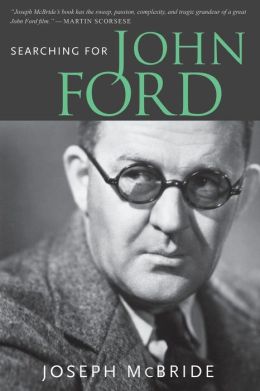
Ford biographer Joseph McBride calls The Searchers "a film of warring dualities" that "gets to the heart of many of the unresolved contradictions that make the Western genre such a rich field for exploring American history and mythology." I think The Searchers gets at the core of those mythological and historical contradictions partly because it occupies the cusp between the Hollywood western's classical and revisionist phases.
You see, most genres or film cycles move through a succession of three broad phases: the formative, the classical, and the revisionist. (Some theorists like to add a fourth phase, the parodic, but I see the mode of parody as already integrated into the revisionist phase, so screw that.)
The formative phase is when the genre does not yet fully exist -- it is being shaped by a process of certain types of films being released, certain patterns and combinations becoming popular, and more of those types of films being made. Westerns have a long history: since some of the first 1890s Edison actualities were of wild west show stars like Annie Oakley, one could say the western genre was nascent in motion pictures from their earliest inception. The Great Train Robbery (1903), one of the first widely seen multi-shot narrative films, is also a western. Therefore one could say that the western's formative phase was also the formative period of Hollywood narrative cinema writ large.
The classical phase of the Hollywood western coincides with the rise of the sound western. Synchronized sound arrived in Hollywood right at the dawn of the '30s, and John Ford's Stagecoach (1939) is usually cited as the inaugural movie of the western's classical period, which lasts through the '40s and into the '50s.

John Wayne as the Ringo Kid in Stagecoach (1939), the film that launched him to stardom. Stagecoach inaugurates the Hollywood western's "classical" phase.
Released in 1956, The Searchers is one of the first revisionist westerns -- or at least a proto-revisionist one.
Many film critics and historians cite Ford's own myth-deconstructing The Man Who Shot Liberty Valance (1962) or Sergio Leone's A Fistful of Dollars (1964), the first major "spaghetti" western, as the tipping point between the sound western's classical and revisionist phases. I can get behind that. Yet revisionist tendencies are present in certain 1950s westerns including The Searchers, Johnny Guitar (1954), and Anthony Mann's Winchester '73 (1950), The Furies (1950), and The Naked Spur (1953).
In the end, The Searchers walks a fine line between classical and self-reflexive tendencies. Broadly speaking, I would say it is classical in its aesthetic choices (artfully constructed visual tableaux, beautiful Monument Valley scenery, a symphonic musical score) but revisionist in its deconstruction of the character of Ethan Edwards.
McBride describes as "subversive" the particular way in which The Searchers
turns the concept of Western heroism inside out, showing the lone gunman who acts in the name of nascent civilization as a warped, destructive force. Martin gains in stature as the search progresses, becoming a truly modern man, whereas Ethan is diminished, trapped in the destructive patterns of the past. The man with mixed blood, not the white supremacist, is the 'intrinsic-most' American.†White supremacist though he may be, Edwards represents both a career high performance for John Wayne and an important iteration of the American frontiersman archetype. This type originates with James Fenimore Cooper's Natty Bumppo, best known as protagonist of The Last of the Mohicans. He is a white character who "goes native," appropriating an indigenous ethnicity with which he identifies. He traverses the boundaries between the indigenous culture he appropriates and the dominant, Euro-American culture to which he also belongs. The American wilderness hero is, in ecocritic David Ingram's words, "close to wild nature and to the naturalized values of force and violence it represents" but at the same time functions as "an agent of the commercial development of that wilderness." †† That is, he travels and identifies with indigenous people but sells them out to the white man anyway.


Ethan's knowledge of Indian culture, including Comanche culture, is extensive and allows him to stay on Scar's trail. More interesting, however, is his identification with Indian culture, an identification which complicates the reading of Scar and Ethan as racial antagonists. [Ethan's] intimate knowledge of Indian beliefs is hard to account for. How does he come to know so much, including religious beliefs, about a people he hates? †††

For a guy who hates the Comanche so damn much, Ethan Edwards sure knows a lot about their customs, beliefs, and funerary practices.
By acting out his racially motivated vengeance, Ethan Edwards shows us the ugly, imperialistic violence that underlies the very notion of the Western protagonist, the very notion of John Wayne. Edwards is both the apotheosis and the deconstruction of the Wayne persona.‡ By contrast, Wayne's role as John T. Chance in Howard Hawks's Rio Bravo, while beautifully nuanced, is a nostalgic return to the good old days; his Tom Doniphon in The Man Who Shot Liberty Valance is a ghost, the last of a dying breed, an elegy for the Wayne/Edwards archetype and its foundational role in building the myth of the West.

Beautifully composed shots like this one exemplify John Ford's show-don't-tell style of filmmaking. For me, this composition suggests that for Ethan, finding Debbie (who is running down the hill in the background) is a matter of the head, but for Martin it's a matter of the heart and guts.
I understand that for some of my readers, The Searchers' status as a western and/or the presence of John Wayne in the lead role dampens your interest in seeing it. Yet if I were to recommend only one western for the non-fan to check out, it would be this one, Rio Bravo, or The Naked Spur. So The Searchers is in my top three westerns -- I cannot recommend it highly enough.
UPDATE 5/19/2016: BFI's Christina Newland calls The Searchers the "Best Place to Start" if you want to explore the 1950s psychological western, a grouping that also includes Mann's The Naked Spur and Nicholas Ray's Johnny Guitar.
Bonus Afterthought: There is an explicit link between The Searchers and Taxi Driver (itself #42 on EW's Top 100 list). Martin Scorsese famously claimed that The Searchers should have included a scene in which we see Scar and Debbie together during their “married” life. When he and Paul Schrader were making Taxi Driver, which borrows many structural and tonal elements from Ford's influential western, they included such a scene between Sport and Iris. Their Taxi Driver "Scar scene" stands out as one of the few in the film that doesn't unfold from Travis Bickle's point of view.

Martin Scorsese discussing Taxi Driver circa 1997.
Film critic Robin Wood says of The Searchers' missing "Scar scene," which would have spelled out "Debbie's relationship to Scar and Comanche life," that
It is a scene Ford could not conceivably have filmed, and Scorsese and Schrader are quite right in implying (I presume) that its absence definitively highlights the cheating, evasion, and confusion that characterize the last third of his movie.Wood calls The Searchers an archetypal "incoherent text," a film that does not quite know what it wants to say, a work "in which the drive toward the ordering of experience has been visibly defeated." Yet as Wood says of Taxi Driver and other "incoherent" films of the 1970s, The Searchers is a much more interesting movie precisely because of its ambiguities, abrupt turns, confusions, and contradictions.‡‡
Analogously, Joan Dagle sees The Searchers' circling, non-linear plot structure as integral to the whole point the film is trying to make: that hate and vengeance are inward-focused and self-destructive. Indeed, The Searchers documents Ethan's racism- and rage-fueled spiral into his own personal hell. It ends with him cast adrift, left with nothing once his fury is spent. Ethan -- and the film -- go nowhere.
Yet of course it goes somewhere: deep into the dark recesses of the psyche of a racist, reactionary white man and the community he both saves and plagues. Head-on into the contradictions and incoherences at the heart of the violent American frontier myth. Head-on into America's bloody, racist past (and present).
This guy, whose analysis is otherwise pretty sharp, feels comfortable comparing The Searchers with Taxi Driver in order to declare the latter "simply a better film" than Ford's masterpiece. For me, these two films, while structurally and thematically similar, are far too different -- in period of release, in genre, in tone -- to be comparatively evaluated.
--
* My short list of most essential Hollywood westerns includes Stagecoach, My Darling Clementine, High Noon, Rio Bravo, The Naked Spur, The Wild Bunch, and Unforgiven. I would also include "spaghetti" westerns like The Good, The Bad, and the Ugly and Once Upon a Time in the West, plus postmodern / revisionist entries El Topo, Dead Man, The Tracker, Meek's Cutoff, and, from what I hear, Slow West.
** Kitses, Horizons West: Directing the Western from John Ford to Clint Eastwood (New Edition) (BFI, 2007) p. 94.
*** McBride, Searching for John Ford (Univ. Press of Mississippi, 2001) p. 558.
† McBride p. 560, 564.
†† Ingram, Green Screen: Environmentalism and Hollywood Cinema (U. of Exeter Press, 2000) p. 74. Ingram offers an extended discussion of the American wilderness hero type on pp. 74-77 of Green Screen, acknowledging his debt to Richard Slotkin's work in Gunfighter Nation:The Myth of the Frontier in Twentieth-Century America (Atheneum, 1992).
††† Joan Dagle, "Linear Patterns and Ethnic Encounters in the Ford Western" in John Ford Made Westerns, ed. Gaylyn Studlar and Matthew Bernstein (Indiana Univ. Press, 2001) p. 122.
‡ In terms of film noir, the comparable performance, the one that goes to such extremes that it exposes the grim, paranoid, ideologically retrograde conventions and assumptions underpinning its genre, is probably Ralph Meeker as Mike Hammer in Kiss Me Deadly (1955).
‡‡ Wood, Hollywood from Vietnam to Reagan and Beyond (Columbia UP, 2003) pp. 47, 42.